
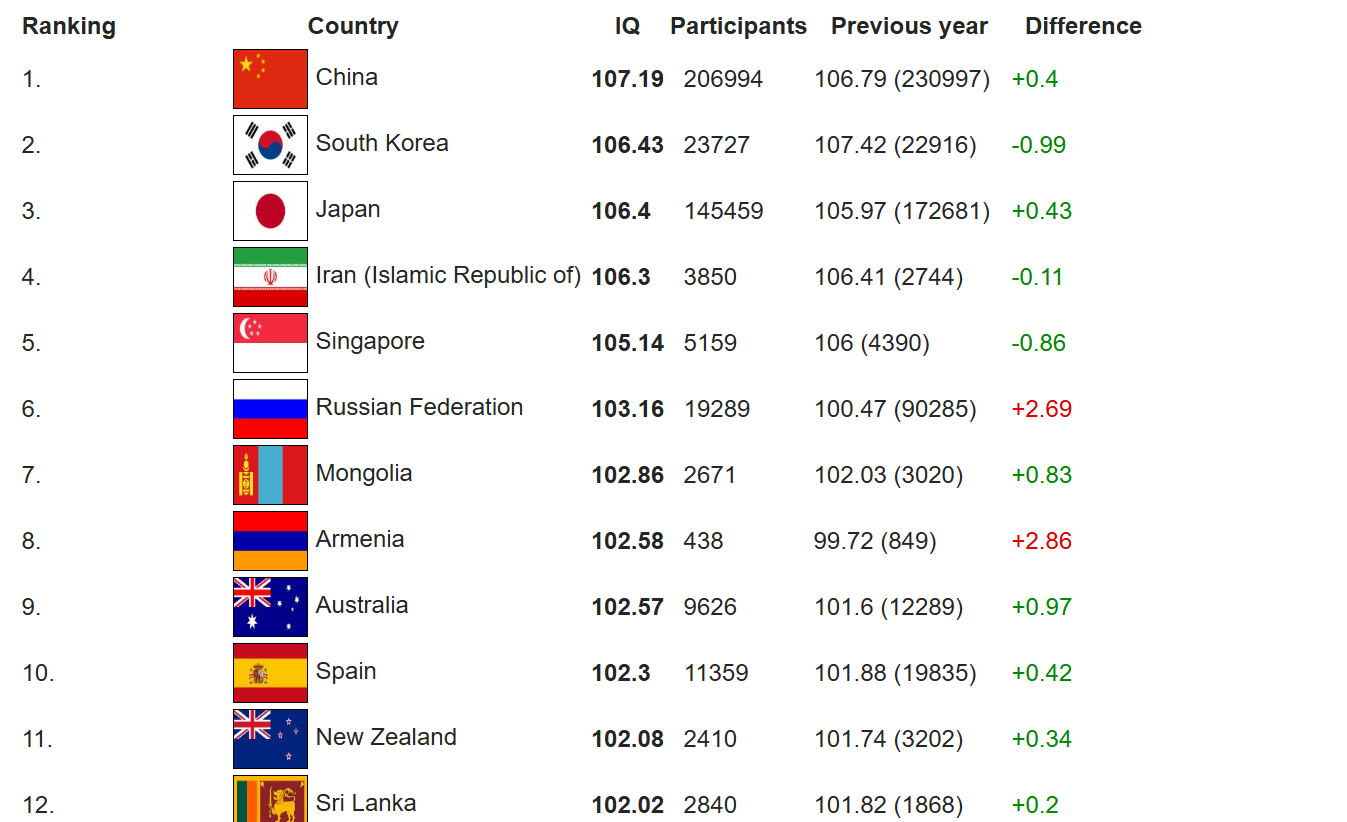
As of 2025, Sri Lanka records the highest average IQ in South Asia, with a national score of 102—placing the country among the top 12 worldwide, according to data from the International IQ Test (IIT).
The findings are based on results from 1,352,763 individuals across the globe who completed the same standardized IQ assessment on the IIT platform. The study also draws on extensive research on national intelligence levels conducted by psychologist Richard Lynn and his collaborator Tatu Vanhanen. IQ outcomes often reflect factors such as education quality, healthcare access, and environmental conditions in each region.
Sri Lanka’s average IQ score surpasses the global mean of 100. A total of 2,840 Sri Lankan participants took part in the assessment. China ranks first globally with an average IQ of 107.
Multiple elements contribute to a nation’s average IQ. Health factors—including infectious diseases—play a role, as do nutrition and intellectual engagement. A 2024 study found that children with healthier diets tend to score higher on IQ tests. Other research shows that regular participation in mentally stimulating activities, such as chess (2022 study), can improve cognitive performance. A classic 1962 study also reported that bilingual children outperform monolingual children on intelligence tests. Genetics is another major factor; a 2013 study of twins suggested that between 50% and 80% of IQ variation can be attributed to genetic influences.
According to IIT, “Countries with strong healthcare systems, healthy dietary practices, and a culture that encourages intellectual development tend to show higher average IQ scores.”
 https://international-iq-test.com/en/test/IQ_by_country
Leave your comments
Login to post a comment
Post comment as a guest