India biggest buyer for SL hand looms’

After nearly two decades of a continued battle for its survival, the handloom sector of Sri Lanka has finally turned around.

“The handloom sector of Sri Lanka faced a setback and declined. However, several government initiatives have successfully revived the sector.

Today, many Lankan handloom makers are reaping good profits” said the Minister of Industry and Commerce Rishad Bathiudeen addressing the inauguration of the annual handloom expo and awards event “Ran Salu”.

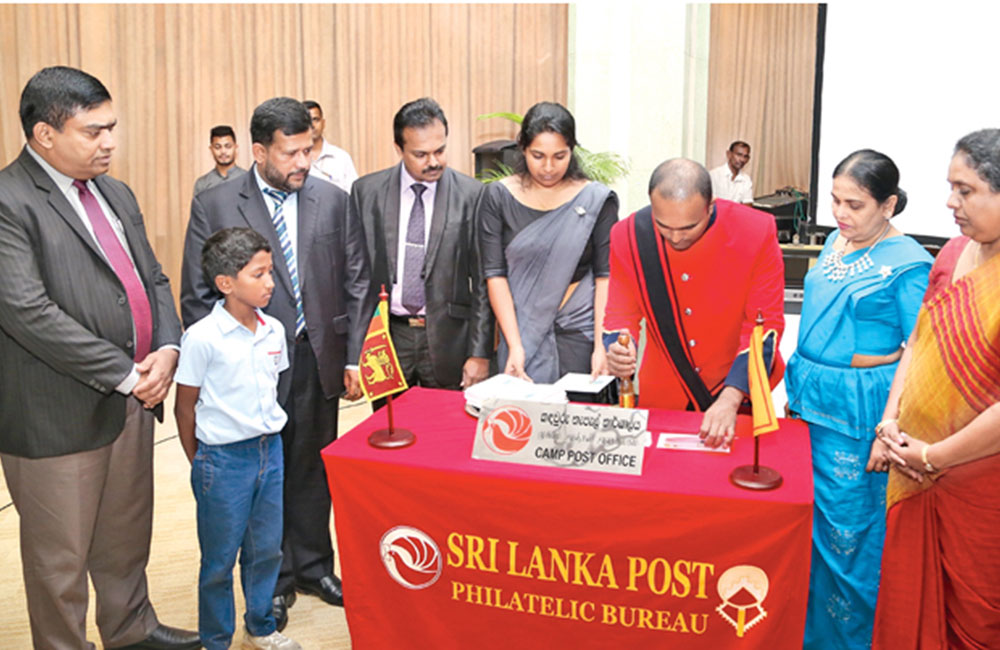
The event also witnessed the issuance of a postal stamp by the Postal Department of Sri Lanka commemorating celebrating the 105 year anniversary of the Handloom Textile Training Centre in Rajagiriya. The handloom sector of Sri Lanka faced a setback and declined, starting from the 1990s. However, several government initiatives have successfully revived the sector.

“Today many Lankan handloom makers are reaping good profits.

I am pleased to say that at present, all handloom products made in Sri Lanka are selling fast, and we are unable to meet the demand.

Most sales revenues are from the Sri Lankan buyers and the rest of revenues are from tourists” said Minister Bathiudeen.”

Sri Lankan handlooms are also being exported now-India being the largest buyer. Most Lankan handloom makers are in the East. Among the other leading provinces for handlooms are central and Southern.

“Over 70% of handloom makers are women and therefore strengthening this sector is a way to empower rural women. This sector is also a contributor to government self-employment creation plans.”

“We are working on establishing a handloom dye and colour centre in the North Central Province with the latest technology. Still, it is important for the sector to recognize excellence. After ten years, we have sent Sri Lankan handloom makers to overseas training.”

Minister Batiudeen also felicitated Ms Chandani Thenuwara-a veteran of Sri Lankan handlooms and who formerly served at the Department of Textiles.

“My biggest contribution to Lankan handlooms is the introduction of shaded colouring technology to the fabrics which was not possible in pre-1970s,” said a jubilant Ms Thenuwara.
 

India biggest buyer for SL hand looms’

Material near-term improvements in Sri Lanka's fiscal strength unlikely: Moody's

Moody's Investors Service says that Sri Lanka's (B1 negative) high general government debt levels, very low debt affordability, and fragile external payments position continue to present the sovereign with material credit challenges.

In particular, persistently high government liquidity and external vulnerability risks will maintain pressure on the sovereign's credit profile, as large external payments come due in 2019-2022.

Looking ahead, continued advancement of reforms that support fiscal consolidation and reduce external vulnerabilities under Sri Lanka's current IMF program will be critical to mitigating macroeconomic risks and strengthening the sovereign's credit profile.

Moody's analysis is contained in its just-released report titled "Government of Sri Lanka: FAQ on fiscal reforms, and exposure to liquidity and external vulnerability risks".

The report provides Moody's view on the following three questions:

1) Have recent fiscal reforms improved Sri Lanka's sovereign credit profile?

2) What is your assessment of government liquidity and external vulnerability risks?

3) Will Sri Lanka's GDP growth contain credit risks?

On the issue of whether fiscal reforms in Sri Lanka have improved the sovereign's credit profile, Moody's says that material near-term improvements in the country's fiscal strength are unlikely. Moody's explains that beside the implementation of the Inland Revenue Act — aimed at broadening the tax base through a simplification of the tax system — more sustained fiscal consolidation will be challenging.

Moreover, contingent liability risks related to state-owned enterprises will persist.

Moody's also points out that Sri Lanka's low tax efficiency and tax collection methods provide significant scope to broaden the tax base, increase tax revenue and eventually lower its elevated debt burden, which was equivalent to just under 80% of GDP in 2017. Ongoing revenue reforms under the IMF program, particularly in tax policy and administration, will support a gradual decline in the debt burden over the medium term.

Moreover, particularly large external maturities are due in 2019-2022. With significant market access required to refinance maturing debt — including a sizeable portion denominated in foreign currency — government liquidity and external vulnerability risks will remain elevated.

Moody's points out that an ongoing accumulation of reserves and implementation of an effective, predictable and transparent liability management strategy would support the sovereign credit profile, by reducing uncertainty around the cost of future refinancing.

With the question of whether Sri Lanka's GDP growth contains credit risks, Moody's says that the country's growth potential and relatively large economy and high income levels when compared with similarly rated sovereigns provide the economy with some shock absorption capacity and will help limit some of the risks from its high debt burden.

Material near-term improvements in Sri Lanka's fiscal strength unlikely: Moody's

Russia restricts tea supplies from Sri Lanka after finding beetle

Russia will place temporary restrictions on imports of all agricultural products from Sri Lanka, including tea, from Dec. 18, the Russian agricultural safety watchdog Rosselkhoznadzor said on Thursday.

The watchdog said it had taken the decision to impose restrictions after it found an insect, known as the Khapra beetle, in the packaging of one consignment of tea from Sri Lanka.

Tea from Sri Lanka accounts for 23 percent of Russia’s tea market, with other supplies come from India, Kenya, China and Vietnam, Ramaz Chanturiya, the head of the Rusteacoffee association, was quoted as saying by RIA news agency.

Members of Rusteacoffee, an association of Russian tea producers, will ask Rosselkhoznadzor to resume tea imports from Sri Lanka but with tougher controls, he added.

Russia imported 141,300 tonnes of tea worth $436 million in the first 10 months of 2017, according to customs data.

Source: Reuters


Russia restricts tea supplies from Sri Lanka after finding beetle

Sri Lanka's Industrial production increased by 3.7%

The volume of industrial production has increased by 3.7% in the month of October according to the Director-General of the Department of Census and Statistics, A.J Satharasinghe. According to Satharasinghe, the increase is when compared to the same month in 2016. The Index of Industrial Productions (IPP) for the months of October 2017 and 2016 were 108.6 and 104.7 respectively.

IIP conveys the status of production in the industrial sector of an economy in a given period of time in comparison with a fixed reference point in the past. It reveals short-term changes in the industrial sector.

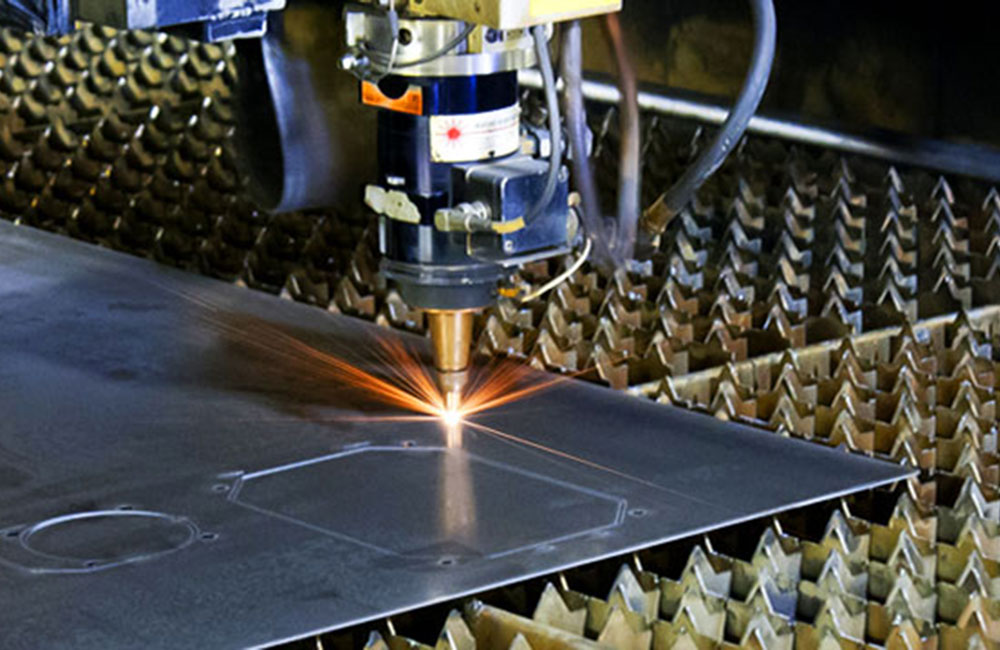
The manufacturing industries; ‘Fabricated Metal Products’. ‘Machinery and Equipment’ and ‘Basic metal products’ have shown remarkable increases of 26.2%, 14.2% and 8.7% respectively compared to October 2016.

Pic Source: innvativefab.com


Sri Lanka's Industrial production increased by 3.7%

Sri Lanka’s BOI plans online investment approvals

Sri Lanka’s investment promotion agency, the Board of Investment (BOI) is planning to set up a system for online approvals of investment proposals, its chief said.

“We are in the process of setting up effective virtual one-stop shop for investment approvals for which we are getting World Bank support,” BOI chairman Dumindra Ratnayaka said.

“It’s going to be totally web-based and virtual,” he told a forum on new initiatives by the BOI held by the investment promotion agency and Council for Business with Britain.

When the system is set up, an investor will be able to submit one application which goes through 24 line agencies which will process it and approve it unless it needs other approvals like environmental impact assessments.

“In the initial phase we are looking at a few agencies that will expand into 24,” Ratnayaka said. “The BOI will sign agreements with all 24 agencies.”

The new system is expected to come on line in the first half of 2018.

ECONOMYNEXT – (COLOMBO, December 11, 2017)

Sri Lanka’s BOI plans online investment approvals

Sri Lanka formally hands over Hambantota port to China

Sri Lanka today formally handed over the southern sea port of Hambantota to China on a 99-year lease.

Two Chinese firms - Hambantota International Port Group (HIPG) and Hambantota International Port Services (HIPS) managed by the China Merchants Port Holdings Company (CMPort) and the Sri Lanka Ports Authority will own the port and the investment zone around it, officials said.

Prime Minister Ranil Wickremesinghe during a visit to China in April had agreed to swap equity in Chinese infrastructure projects launched by former president Mahinda Rajapaksa in his home district.

Sri Lanka owed China US 8 billion then finance minister Ravi Karunanayake had said last year.

"With this agreement we have started to pay back the loans. Hambantota will be converted to a major port in the Indian Ocean," Wickremesinghe said while addressing the handing over ceremony held in parliament.

"There will be an economic zone and industrialization in the area which will lead to economic development and promote tourism," the Prime Minister said.

By PTI
Dec 09, 2017

Sri Lanka formally hands over Hambantota port to China

Economic Freedom Summit in Sri Lanka offers road-map for economic prosperity

December 6, 2017

Each year, the Fraser Institute releases its Economic Freedom of the World Index, which ranks every country based upon the degree to which each country’s policies and institutions support economic freedom. Advocata Institute, an Atlas Network partner organization in Sri Lanka (most recently ranked 94th in the index), recently hosted an Economic Freedom Summit with the Fraser Institute to examine the country’s performance in the index and discuss how the country can improve its rankings through reforms. The summit was an opportunity for Advocata Institute to provide a comprehensive description of the current economic policies in Sri Lanka and to offer a prescription for reform to boost the economy. It also held an essay contest at the event, which brought in one hundred and twenty different essays in three different languages discussing economic reform in Sri Lanka.

“The quality of people at the audit, including CEOs, opinion leaders, government officials, the media, academics and so on, was exceptional,” said Fred McMahon, the Fraser Institute’s chair of economic research. “[It started with a] speech from Eran Wickramaratne, [Sri Lanka’s] state minister of finance. The organization was excellent, every breakout session had a highly competent chair and a dedicated secretary, laying the foundation for an excellent follow-up report. This, I believe could become a significant roadmap for moving Sri Lanka forward. But it wasn’t just the audit. Advocata Institute organized impressive side events in both English and [Sinhalese] to get the message out to the public—including a highly effective essay contest. It was marvelous to see how many students attended, [proud of] their work.”

During the summit, Advocata Institute released a reform action plan for Sri Lanka. This document, compiled by Advocata Institute’s staff and commissioned economists, was released in English, Sinhalese, and Tamil to reach the entire population. The purpose of this action plan is to bring the summit’s participants face-to-face with their nation’s economic performance and show them the path to prosperity and opportunity through economic freedom. Advocata Institute wants to instill a sense of ownership of reform in Sri Lankans, encouraging them to advocate for the policies that will advance their society.

The summit received a tremendous amount of press coverage, sparking a national debate on immigration of skilled labor and taxi regulation37874943201 d4effb791e k while giving Advocata Institute significant publicity. To see some video coverage of the Economic Freedom Summit, check out Advocata Institute’s media page. Advocata Institute, with the help of the Economic Freedom of the World Index, has identified how Sri Lanka can enhance its economic freedom, laying out the path to prosperity and generating momentum behind the liberty movement on the island.

 Source: https://www.atlasnetwork.org/news/article/economic-freedom-summit-in-sri-lanka-offers-roadmap-for-economic-prosperity

Economic Freedom Summit in Sri Lanka offers road-map for economic prosperity