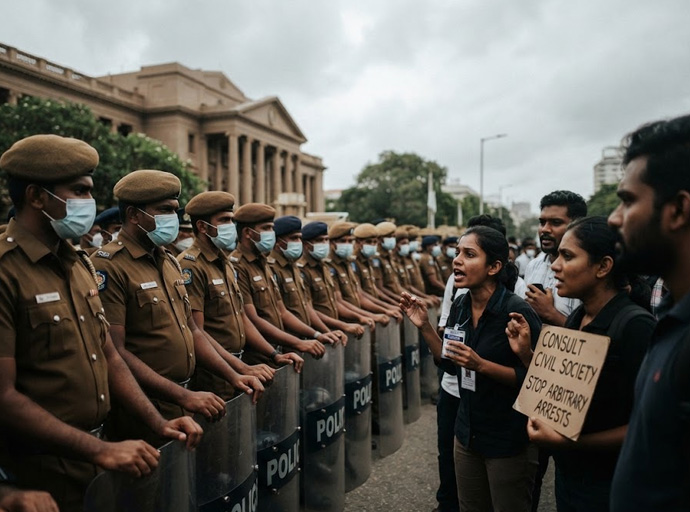
The World Organisation Against Torture has warned that Sri Lanka's new counterterrorism draft law risks perpetuating severe human rights violations as Parliament prepares to receive the legislation today.
The rights group expressed deep concern that the Protection of the State from Terrorism Act retains problematic provisions from the 47 year old Prevention of Terrorism Act.
The government published the replacement legislation in the official Gazette on 22 September ahead of its scheduled first reading in Parliament on 6 October.
International observers cautioned that the draft law uses overly broad definitions of terrorism that fail to align with international standards.
The legislation criminalises acts aimed at compelling government or international bodies to act, creating significant risks of arbitrary abuse against journalists, human rights defenders, political opponents, and minority communities.
Although the text contains explicit exclusions for peaceful protests, advocacy, and industrial actions, rights advocates warned that these safeguards remain fundamentally insufficient to prevent misuse.
Under Section 29, the draft framework empowers the Executive to issue two month detention orders without prior judicial approval.
Magistrates may extend these orders every two months up to a maximum of one year.Section 28 allows combined remand and detention periods of up to two years before formal indictments are served.
The organisation highlighted that Magistrates frequently rely on police and prosecution submissions without exercising meaningful judicial oversight, thereby heightening the threat of arbitrary detention, torture, and ill-treatment.
The bill also grants extensive operational powers to military personnel, including authority to conduct stops, searches, arrests, and 24 hour detentions before handing suspects over to police.
Travel time is excluded from this 24 hour limit without setting a maximum allowable duration, raising grave concerns about enforced disappearances.
Furthermore, the Attorney General is granted authority to suspend criminal proceedings for up to 20 years in exchange for suspects agreeing to rehabilitation, community service, or public expressions of remorse.
Rights advocates noted that suspects facing prolonged detention may feel coerced into accepting these punitive measures, effectively undermining the presumption of innocence.
The World Organisation Against Torture has urged Sri Lankan lawmakers to undertake a fundamental review of the proposed framework to align counterterrorism measures strictly with international human rights commitments
Leave your comments
Login to post a comment
Post comment as a guest