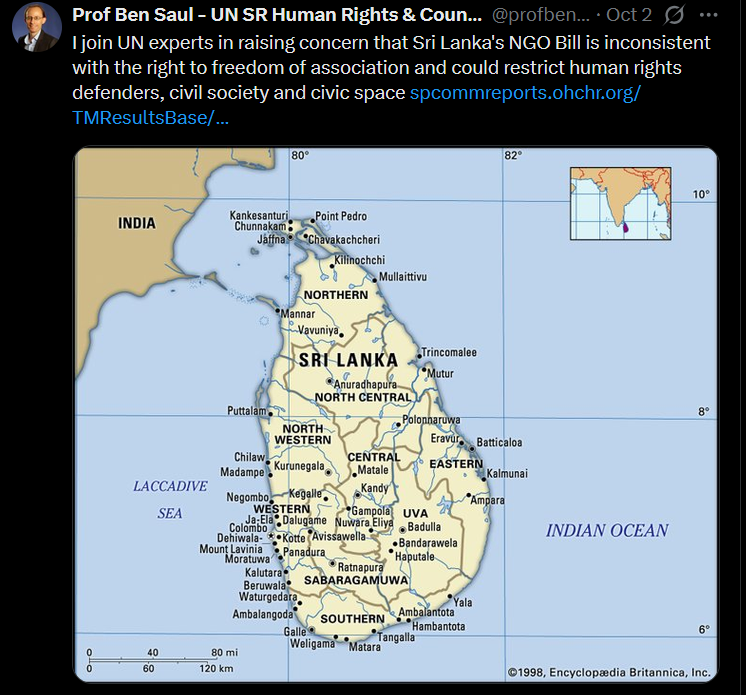
Four United Nations Special Rapporteurs have formally raised serious concerns over Sri Lanka's draft Non-Governmental Organisations (Registration and Supervision) Bill 2026, cautioning state authorities that the proposed statutory framework threatens fundamental civic freedoms.
In a joint communication addressed to the government, human rights experts Ben Saul, Leopoldo Maldonado Gutiérrez, Gina Romero, and Andrea Bolaños Vargas warned that the draft legislation published in June 2026 could severely curtail freedom of association and public expression across the island.
The United Nations experts pointed to the government's own risk assessment published in January 2026, which classified the inherent terrorist-financing risk within the domestic non-governmental sector as low to medium, with minimal documented evidence of illegal money laundering.
Emphasising that international counter-terrorism standards mandate targeted, risk-based regulation rather than sweeping administrative controls, the rapporteurs asked the government to clarify how the legislation complies with global standards, whether substantial amendments will be introduced, and if the final text will undergo transparent public consultation.
Under the contested statutory framework, non-governmental organisations and civil society bodies would be forced to register with a designated Competent Authority to secure three-year operational permits. Operating without valid registration would become a punishable criminal offence carrying fines up to Rs 1 million.
The draft law grants state officials wide regulatory powers to inspect premises upon notification, review employee records, and examine external financing channels.
The rapporteurs expressed particular alarm over legal clauses compelling civil society groups to align their operational mandates with official state policies.
They warned that vague deregistration grounds, such as activities deemed detrimental to national security, sovereignty, or territorial integrity, could suppress political advocacy and human rights campaigning through broad state oversight.
Furthermore, restrictions imposed on crowdfunding platforms and access to international grants risk creating a severe chilling effect on democratic dissent and civil society advocacy throughout the country.
Leave your comments
Login to post a comment
Post comment as a guest