
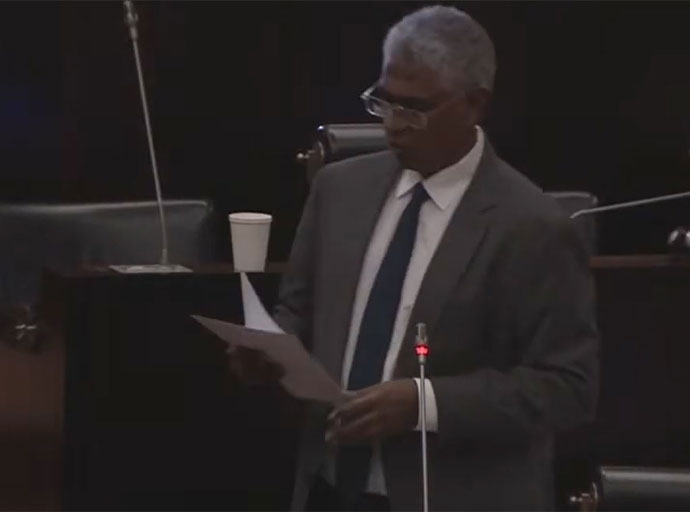
Sri Lanka must urgently repeal its 1890 colonial-era Prisons Ordinance and expand bail mechanisms to relieve a severe overcrowding crisis that has pushed prison occupancy past 300 percent of capacity, opposition MP Faiszer Musthapha (PC) said.
Speaking in Parliament during a debate on prison reform, he highlighted systemic failures affecting over 36,000 inmates nationwide.
*Legislative reform*
Musthapha pointed out that the nation's correctional system continues to operate under an outdated 1890 British colonial statute that fails to address contemporary rehabilitation needs.
To modernise the justice framework, he urged the government to introduce new legislation alongside modern non-custodial alternatives.
He called for the implementation of electronic tagging for house arrests and the expansion of open prisons situated in agricultural zones.
Deploying willing inmates into construction and agricultural sectors would simultaneously alleviate national labor shortages and allow prisoners to earn a sustainable income.
He emphasised that the Rs. 5 billion allocated for capital expenditure remains grossly insufficient to upgrade dilapidated prison infrastructure and basic facilities.
*The remand crisis*
Statistical comparisons presented to the House highlighted the severity of Sri Lanka's correctional congestion.
While prison density stands at 120 per cent in India, 167 per cent in Pakistan, and 183 per cent in Bangladesh, Sri Lanka's facilities house more than 36,000 individuals despite having a maximum capacity for roughly 10,000.
Only about 10,000 of those incarcerated are convicted offenders, leaving an overwhelming majority languishing in remand custody due to prolonged investigations and an inability to afford minor bail or fines.
Musthapha reminded lawmakers that every individual is presumed innocent until proven guilty and that the Constitution strictly prohibits inhuman or degrading treatment.
He stressed that bail should serve as the standard rule rather than the exception, suggesting that the state partner with the private sector and civil society to settle unpaid fines for impoverished detainees.
*Welfare of female inmates and children*
Musthapha drew attention to international standards such as the Nelson Mandela Rules and the Bangkok Rules.
Out of more than 1,000 women currently held in custody, only around 200 are serving sentences while the rest remain in remand.
Highlighting an acute shortage of sanitary napkins, he proposed installing sanitary pad manufacturing machines inside all female correctional facilities, modeled after India's Pad Man initiative, so inmates can produce their own supplies.
He also raised serious concerns regarding approximately 30 infants born inside Sri Lankan prisons, warning that recording a prison as their birthplace on official birth certificates would permanently damage their futures.
*Rehabilitation*
Musthapha noted that high rates of repeat offenses stem from a failure to equip inmates with marketable skills, proposing vocational training programs in collaboration with the Open University and the Ministry of Vocational Training.
He observed that the famous slogan painted on the Welikada Prison wall declaring that prisoners are human beings has been reduced to mere words while society continues to ostracize former inmates.
In response, Justice Minister Harshana Nanayakkar said that the government is already generating revenue through inmate rehabilitation, noting that prison handicraft exhibitions have earned Rs. 5.2 million and that computer chips are currently manufactured within correctional facilities.
Dismissing criticism over the pace of change, the Minister said that it is unfair to expect his administration to resolve within a single year the systemic decay left behind by governments that ruled for four or five decades, though he pledged to clean up the mess.