
Sri Lanka's tea industry is confronting an increasingly difficult economic challenge as cheaper foreign tea imports threaten domestic market stability, plantation livelihoods and the country's ability to maintain its premium position in international markets.
The warning issued by the Planters’ Association of Ceylon (PA) exposes a structural weakness in an industry that remains one of the country's most important agricultural export earners. While Sri Lanka continues to promote Ceylon Tea as a premium product, the growing use of imported tea in blending and re-export operations raises questions about whether the country's commercial interests are being prioritised over the long-term sustainability of local production.
The immediate concern is the widening cost disadvantage faced by Sri Lankan producers.
Domestic tea production costs are estimated at more than US$3.10 per kilogram, compared with approximately US$1 to US$1.25 in competing producing countries such as India and Kenya. Labour-intensive harvesting, ageing tea bushes, difficult terrain, fertiliser expenses and rising operational costs have placed local plantations under considerable financial pressure.
Foreign tea imports therefore provide exporters with cheaper raw materials, but potentially create an unequal competitive environment for domestic growers.
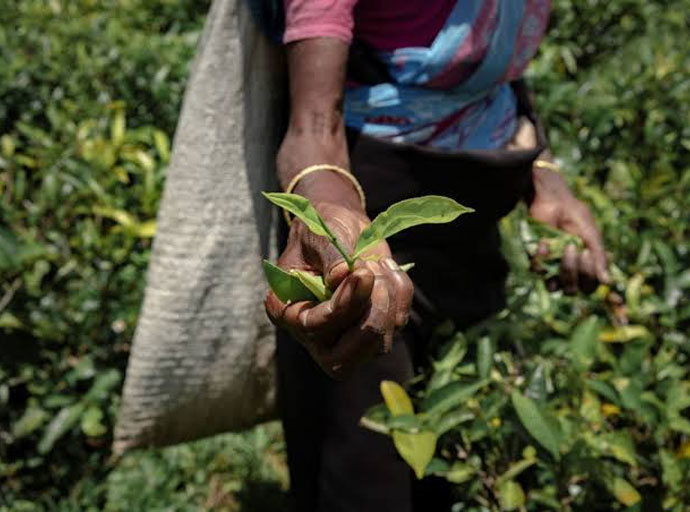
The consequences are particularly significant for the smallholder sector, which accounts for more than 70% of national production. Over 400,000 smallholder families depend on tea cultivation, while plantation communities provide employment to thousands of additional workers.
Their financial survival is closely connected to prices realised at the Colombo Tea Auction. Lower demand for locally produced tea can weaken auction prices, eventually reducing the green-leaf payments received by farmers.
The reported increase in unsold tea quantities is another worrying development. Under normal conditions, approximately 5% to 8% of weekly auction offerings remain unsold. However, industry information cited by the PA indicates that this proportion has increased to around 25%.
The deterioration cannot be explained by foreign imports alone. The removal of the Simplified VAT scheme in October 2025 increased exporters' cash-flow requirements, while geopolitical tensions and shipping disruptions in March 2026 affected access to important export destinations. These developments compounded existing market weaknesses.
Nevertheless, the import-dependent blending model requires closer examination.
Existing Sri Lanka Tea Board regulations provide for a 70:30 ratio when imported tea is blended with locally produced tea for re-export, subject to prescribed conditions. The requirement is intended to ensure that local tea remains the principal component of the final product.
The authorities must now demonstrate whether these safeguards are being effectively implemented, including verification of imported quantities, local auction purchases, blending ratios and export labelling.
There is also a significant national economic dimension. If exporters increasingly depend on imported raw materials, the country risks losing domestic agricultural value addition, rural employment opportunities and foreign-exchange earnings generated through local production.
The longer-term threat is even more serious. Smallholders facing inadequate returns may abandon tea cultivation or switch to alternative crops such as cinnamon and rubber. Reversing such a decline would require substantial investment in replanting, productivity improvements and better agricultural support.
The Government and the Tea Board therefore face a difficult policy choice in protecting the legitimate value-added export business without allowing imported tea to undermine local growers.
Sri Lanka cannot compete with India and Kenya simply by producing cheaper tea. Its competitive advantage lies in quality, provenance, and international confidence.
Protecting Ceylon Tea means protecting the people who produce it.