
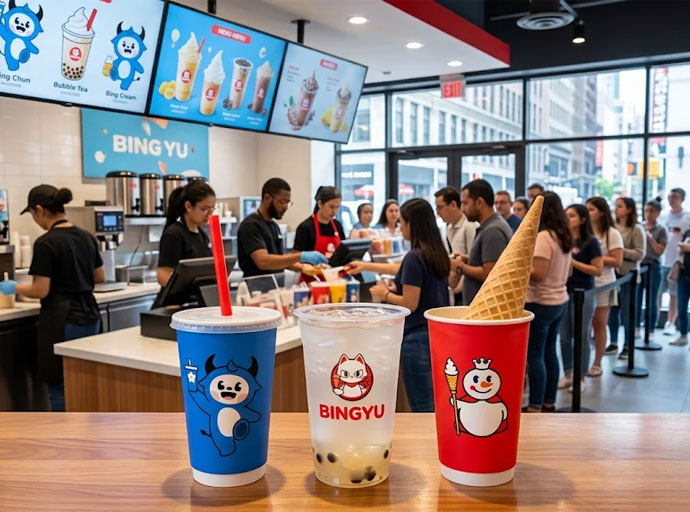
The rapid expansion of low-cost Chinese food and beverage franchises across Colombo and its suburbs is placing intense competitive pressure on Sri Lankan small businesses while raising concerns over foreign-exchange outflows and regulatory oversight.
More than 32 outlets operated by brands such as Bing Chun, BingYu and Bingxue have opened across key commercial hubs including Kollupitiya, Wellawatta, Kohuwala, Nugegoda, Battaramulla and Wattala.
Operated through partnerships between Chinese supply chains and local master franchisees such as ICETALK TIME (PVT) LTD, these outlets rely on centralised procurement, standardised equipment and opening subsidies to launch within weeks and attract students, young professionals and families with low prices and social-media-driven marketing.
Industry observers note that while consumers benefit from affordable prices, greater choice and new retail jobs, traditional Sri Lankan ice cream makers, independent juice bars and family-owned eateries struggle to compete against the economies of scale enjoyed by international franchise networks.
Because domestic operators work with smaller purchasing volumes and limited capital, they cannot easily match the pricing or promotional budgets of larger foreign-backed chains.
Regulatory scrutiny is now focused on whether these franchises operate under transparent commercial and tax conditions, particularly as Sri Lanka works to protect its foreign-exchange reserves.
Questions remain over the volume of imported ingredients, machinery and packaging used by the chains, as well as how franchise fees, royalties and overseas supplier payments are recorded and taxed.
Analysts say that authorities must establish a clear framework to ensure fair taxation, technology transfer and local value addition rather than relying solely on imported supply chains.
Encouraging these networks to source dairy, fruit and packaging from Sri Lankan producers where feasible could turn rapid retail growth into a direct boost for domestic agriculture and manufacturing.
Sri Lanka's policymakers must ensure that the popularity of foreign retail brands translates into genuine domestic economic value and a level playing field for local entrepreneurs.