
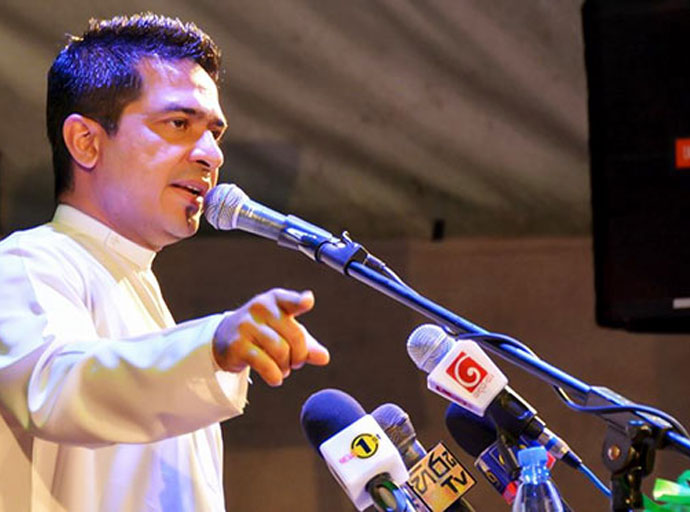
Sri Lanka's agricultural sector, small businesses, and ordinary citizens face acute financial distress as flawed economic and investment strategies stifle national production, Samagi Jana Balawegaya (SJB) MP Sujeewa Senasinghe said.
Speaking during the Second Reading debate on the 2027 Budget in Parliament, the opposition lawmaker criticised the government's fiscal management strategies and urged immediate policy reforms to protect domestic industries.
He warned that rising indirect taxes have left households and small and medium enterprises deeply vulnerable, while mounting bank loan pressures and heavy tax burdens are forcing local business owners to leave the country.
He noted that farmers are struggling with severe shortages and an inability to sell their harvests at fair market prices.
Addressing macroeconomic performance, Senasinghe said that gross domestic product growth remains below expectations due to sluggish foreign direct investment, contrasting Sri Lanka's low investment inflows with stronger rates seen in regional peers such as India and Bangladesh.
He pointed out that authorities had previously rejected vital foreign renewable energy projects despite the island's substantial generation capacity, forfeiting significant economic benefits.
Senasinghe also highlighted what he described as a sharp policy reversal by the ruling government, noting that leaders who once fiercely opposed the International Monetary Fund (IMF) programme, international agreements, and past development initiatives are now entirely reliant on those very frameworks.
He also commended the Leader of the Opposition for delivering a substantive political and economic critique of a budget introduced amid intense public hardship.