
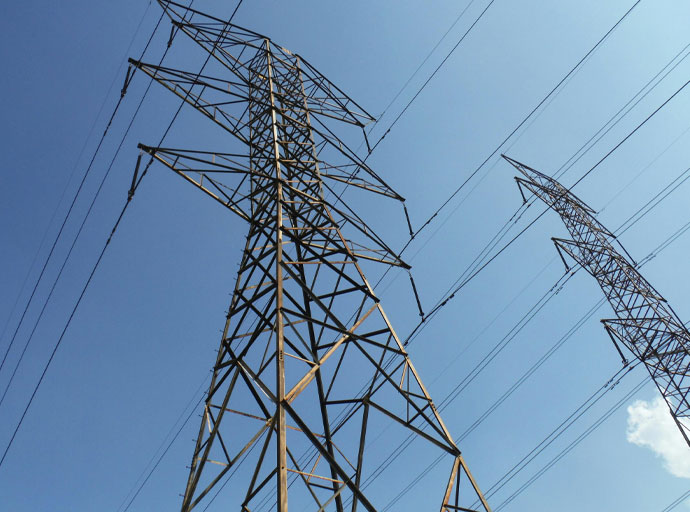
Sri Lanka’s latest electricity transmission expansion agreement with China’s Shanghai Electric Group presents an important opportunity to modernise the national power network.
But beneath the promise of improved electricity supply and renewable energy integration lies a much bigger question. Will this multibillion-rupee infrastructure investment strengthen Sri Lanka’s own engineering capabilities, or deepen its dependence on foreign contractors for critical national infrastructure?
The National Transmission Network Service Provider Ltd. (NTNSP) signed the engineering, procurement and construction contract with Shanghai Electric Power Transmission and Distribution Engineering Co. Ltd. on November 5 for an 87.7-kilometre transmission network expansion under Package 2 of the Asian Development Bank-funded Power System Strengthening and Renewable Energy Integration Project.
The project comprises a 78-kilometre, 132 kV transmission line between Matara and Hambantota and three additional connections serving the Homagama, Mirigama and Negombo grid substations.
There is little doubt that the investment addresses a genuine infrastructure requirement. Sri Lanka's ambitious renewable energy programme cannot succeed without sufficient transmission capacity to transport electricity generated from wind and solar projects to consumers. Without a stronger grid, additional generation capacity could remain underutilised, undermining both investment returns and national energy targets.
However, the economic justification for the project should not exempt its procurement and implementation from rigorous public scrutiny.
The original international bidding invitation, advertised by the Ceylon Electricity Board on April 4, 2025, established a competitive procurement framework financed through ADB Loan 4548-SRI. It prescribed minimum technical experience and financial turnover requirements for prospective bidders.
Shanghai Electric's previous involvement in Sri Lankan infrastructure, including the Veyangoda and New Chilaw grid substations, provides evidence of its experience in the country's electricity sector. Nevertheless, previous contracts cannot substitute for independent verification that the company satisfied all the qualification requirements of this particular tender.
The Government must therefore disclose the number of competing bidders, technical evaluation results, financial proposals and the reasons for selecting the successful contractor.
More importantly, the appointment of ComCorp Ltd. as the local engineering partner raises questions about the actual distribution of economic benefits.
Although ComCorp has operated in Sri Lanka since 1997 and possesses experience in protection systems, power transformers, transmission engineering and utility asset management, the authorities should clarify how much engineering work, equipment procurement, skilled employment and technical responsibility will remain within the country.
A local partnership should deliver more than a symbolic presence. It should create opportunities for Sri Lankan engineers to acquire advanced expertise and participate in increasingly sophisticated electricity infrastructure projects.
Another critical issue is the long-term cost of operating and maintaining the new infrastructure. Transmission equipment requires specialised maintenance, replacement components, technical support and regular system upgrades. Unless these responsibilities are clearly established, the country could face continuing foreign exchange expenditure and supplier dependence long after construction is completed.
The strategic importance of electricity transmission infrastructure also demands strict cybersecurity, operational security and independent regulatory oversight.
The Government should ensure that all equipment and control systems meet national security requirements, with clear provisions governing access to sensitive operational information.
Ultimately, the success of this project cannot be measured merely by the number of kilometres of transmission lines constructed or the completion of grid connections.
It must also be measured by whether the investment reduces electricity transmission losses, improves supply reliability, supports renewable energy generation and lowers the long-term cost of electricity for households and businesses.
The Asian Development Bank's project information identifies a total financing commitment of US$200 million through two loans of US$150 million and US$50 million. The Bank also identifies improved network reliability and renewable energy integration as central project objectives.
An additional issue requiring clarification is the difference between the original tender specifications and the November contract announcement concerning the Mirigama grid connection. The original invitation specified a double in-and-out connection, whereas the announcement describes a single-circuit connection. Authorities should explain whether this reflects a technical revision or a reporting discrepancy.
Sri Lanka has already invested heavily in foreign-funded energy infrastructure. It cannot afford to repeat past mistakes through inadequate contract supervision, insufficient disclosure or failure to develop domestic technical expertise.
The Government must therefore make the complete contract and procurement evaluation documents accessible to the public, while ensuring independent monitoring of implementation and expenditure.
Foreign expertise should accelerate Sri Lanka's energy independence, not create another generation of dependence on foreign suppliers and contractors. They want the full contract and evaluation documents opened to the public, with independent monitoring of delivery and spending.