
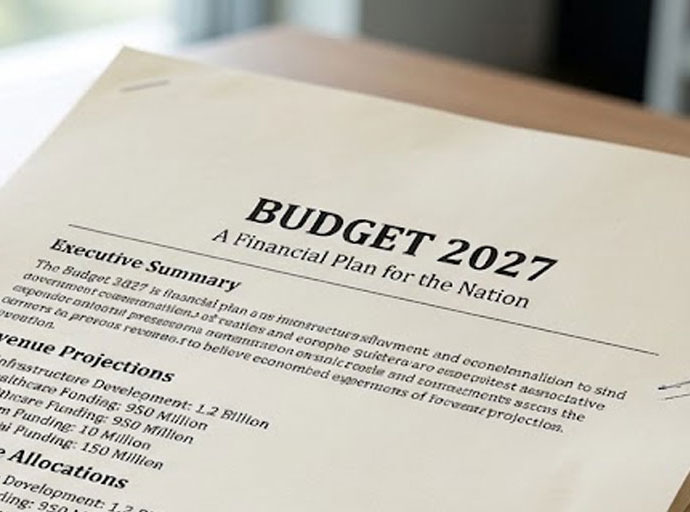
Sri Lanka’s upcoming 2027 Budget faces a formidable challenge in balancing household tax relief with the strict fiscal discipline required to safeguard economic recovery.
The National People's Power (NPP) government will present the financial proposals in Parliament on 12 November, setting out public spending plans amidst rising living costs and an approaching conclusion to the nation's 2.9 billion US dollar International Monetary Fund (IMF) bailout programme in March 2027.
Moving away from strict crisis-era consolidation, the Treasury plans to pivot towards targeted welfare programmes, job creation, and developmental investment.
Treasury Secretary Dr. Harshana Suriyapperuma indicated that corporate tax rates and the Social Security Contribution Levy would remain largely unchanged, with authorities relying instead on broader compliance, administrative digitisation, and the elimination of revenue leakages to prevent further tax increases.
Lower- and middle-income earners could see financial pressure ease through proposed adjustments to direct taxation, including an expected increase to the monthly Pay-As-You-Earn tax threshold beyond the current Rs. 150,000 baseline alongside potential raises to the Advance Personal Income Tax threshold up to Rs. 200,000.
Further relief measures under consideration include expanded cash transfers via the Aswesuma scheme, targeted energy subsidies for vulnerable sectors, concessionary financing for domestic solar installations, and increased funding for youth technical training.
These planned concessions must be delivered without undermining the target of maintaining a primary surplus of 2.6 percent of gross domestic product.
State revenue performance has recorded a substantial rise from 7.3 percent of gross domestic product in 2021 to 15.4 percent, yet experts stress that future sustainability requires tackling tax arrears, administrative inefficiencies, and unwarranted exemptions.
The government must now prove that public funds are being deployed effectively to generate measurable economic benefits while preserving long-term stability.