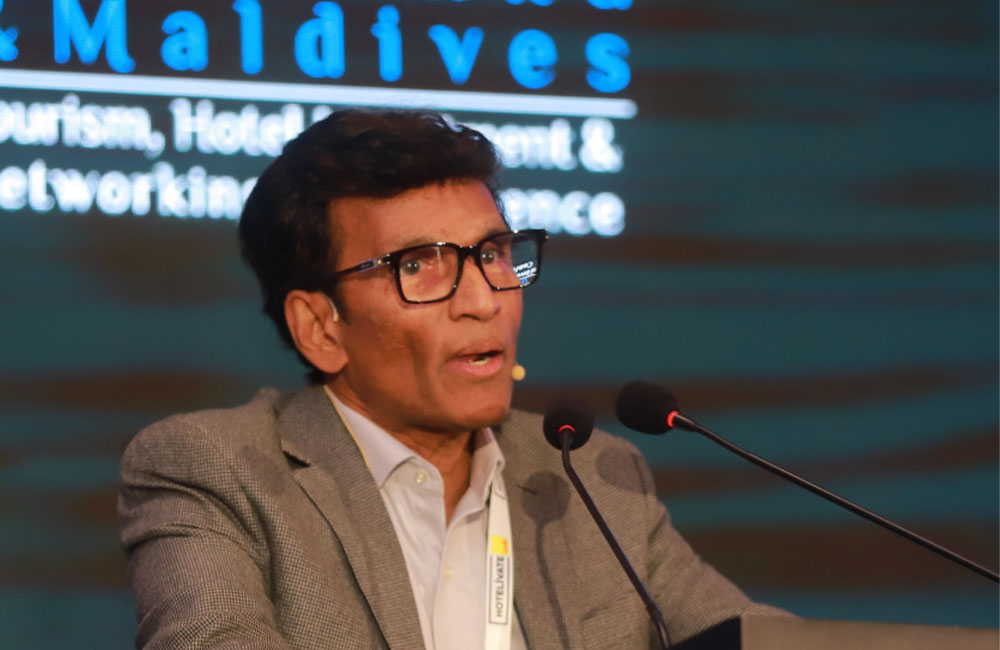
Sri Lanka’s failure to capture high-value global tourism stems from decades of mismanaged state land pricing, weak coastal zoning, and arbitrary arrival targets lacking strategic backing, an industry expert said.
Speaking at the THINC Tourism Conference in Colombo on 15 October 2026, TWC Holdings Chairman Thilan Wijesinghe outlined critical structural missteps that have constrained the nation’s hospitality sector over the past 20 years.
Drawing on his experience launching luxury ventures such as Ceylon Tea Trails, Wijesinghe called for an immediate overhaul of national tourism policy to elevate the island beyond low-yield market segments.
Policy missteps and structural failures
Critiquing past administrative decisions, Wijesinghe noted that successive governments mistakenly treated numerical arrival targets as a substitute for comprehensive tourism planning.
State authorities were faulted for mispricing scarce coastal land, with 99-year leases in 2012 priced at roughly Rs. 20 million per acre on the East Coast—representing a 400 per cent premium over local freehold values—which forced investors to shrink project footprints or abandon ventures entirely.
The deregulation of coastal height limits further damaged high-end destinations like Tangalle and Talpe by allowing high-rise apartment builds to encroach on finite beachfront land.
Consequently, only six per cent of Sri Lanka’s graded resort inventory is currently managed by international brands, compared with at least 33 per cent in competing destinations such as the Maldives, Mauritius, and Vietnam.
Proposals for reform and transformation
To rectify these historical imbalances, Wijesinghe proposed five core policy interventions, including the enforcement of strict destination-level zoning, government viability-gap funding for domestic aviation to connect the North and East, and tax measures targeting long-term speculative holding of undeveloped beachfront property.
He also urged state support for rebranding aging hotels through international joint ventures and restricting coastal high-rise developments to designated urban zones.
Wijesinghe also highlighted two transformative infrastructure proposals.
He suggested partnering with global luxury rail operators like Orient Express to utilise the historic Colombo-Badulla track, and exploring the feasibility of hosting a Formula One street race circuit connecting Galle Face and Colombo Port City.
Strategic execution to unlock value
The address concluded with an emphasis on shifting national strategy from volume-driven metrics to high-yield tourism experiences.
With international management agreements recently secured for luxury developments including a Ritz-Carlton Reserve, Wijesinghe stressed that Sri Lanka must capitalize on renewed investor interest from India and the Middle East by establishing consistent policies to turn its natural assets into long-term economic value.
Leave your comments
Login to post a comment
Post comment as a guest