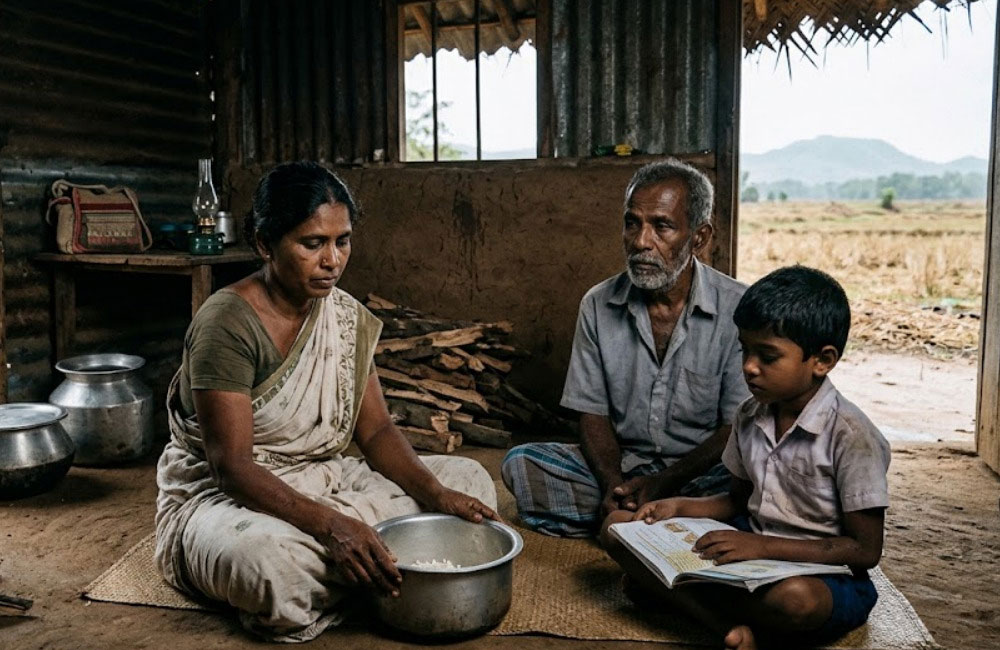
Sri Lanka’s national poverty rate has climbed to 16 per cent following the economic crisis, leaving approximately 3.42 million people living below the official threshold.
The figures were published by the Department of Census and Statistics in its preliminary Household Income and Expenditure Survey for the first quarter of 2025, which gathered data from a nationally representative sample of 25,000 households.
The findings show that post-crisis price increases have reversed years of steady poverty reduction across the island.
Stark regional disparities persist across the country, with the rural sector accommodating the vast majority of the impoverished population at roughly 2.9 million individuals.
The estate sector recorded the highest overall poverty rate at 23 per cent, while the rural sector stood at 17.3 per cent and urban areas registered 7.8 per cent.
Analysts emphasize that while nominal household income surged to an average of 120,266 rupees per month, severe inflation eroded real earning power by nearly 8 per cent compared with 2019 levels.
Median households suffered an even sharper purchasing power contraction of 11.1 per cent.
Although average monthly household expenditure rose to 116,191 rupees, experts attribute the higher spending almost entirely to inflated prices rather than improved living conditions.
Reflecting the soaring costs of basic foodstuffs and essential goods, the official individual monthly poverty line more than doubled from Rs. 6,966 rupees in 2019 to Rs. 16,417 in 2025.
Leave your comments
Login to post a comment
Post comment as a guest