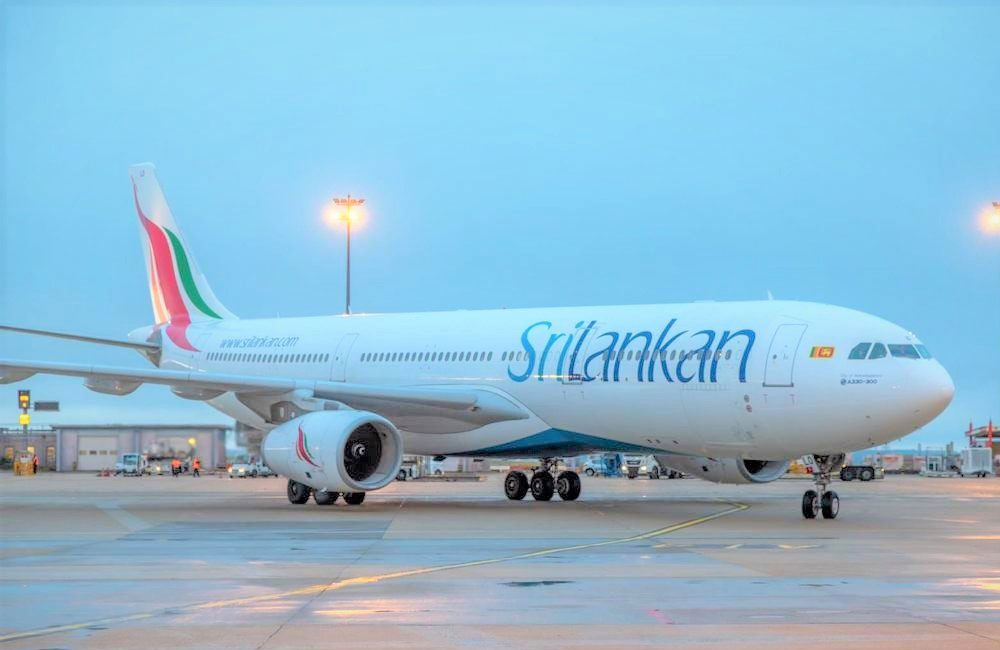
SriLankan Airlines is sinking deeper into a financial crisis, with mounting losses, escalating operating costs and an enormous negative equity position raising fresh questions about the sustainability of the national carrier and the growing burden placed on public finances.
The airline recorded a pre-tax loss of Rs. 35.6 billion during the first quarter of the 2026/27 financial year, significantly worsening its financial position compared with the corresponding period of the previous year, when its net loss stood at Rs. 12 billion.
The deterioration has occurred despite a substantial increase in revenue, which rose to Rs. 82.8 billion from Rs. 62.6 billion a year earlier. The central problem is that the growth in income has been overwhelmed by an even sharper escalation in operating expenditure.
Total operating costs increased by 40.4% to Rs. 95.2 billion, with aircraft fuel expenditure alone surging by 93% to Rs. 41.2 billion. The increase demonstrates the airline's vulnerability to international fuel-price movements, operational disruptions and weaknesses in controlling expenditure.
The airline's operating loss reached Rs. 12.5 billion, while foreign exchange losses and finance costs further aggravated its financial difficulties. Although SriLankan Catering generated a net profit of Rs. 3.4 billion, reducing the overall group loss to Rs. 32.2 billion, the contribution was insufficient to reverse the deteriorating financial position.
More alarming is the airline's balance-sheet position. Its negative equity has reached Rs. 351.5 billion, with total liabilities of Rs. 561.4 billion against assets of only Rs. 209.9 billion.
These figures expose a fundamental financial imbalance that cannot be resolved simply through increased passenger revenue or marginal improvements in operational efficiency.
The Finance Ministry has acknowledged that operating deficits, high fuel and maintenance expenditure, foreign exchange losses and finance costs continue to restrict the company's ability to generate sufficient internal cash flows to meet its financial and operational obligations.
Consequently, the General Treasury has been compelled to finance bank loan repayments and provide US$30 million in emergency funding to sustain operations. In March 2026, the Government also absorbed US$126.5 million in restructured guaranteed bonds directly into public debt.
This raises a critical question about the ultimate cost of maintaining the national carrier: how much longer can taxpayers finance an airline whose liabilities substantially exceed its assets?
Operational difficulties have compounded the financial crisis. Airspace closures in West Asia disrupted flight schedules and forced cancellations and rerouting, while increased operating costs placed further pressure on already weakened finances.
The Cabinet approved a Strategy and Restructuring Committee in June 2026 to examine the airline's financial sustainability and commercial viability. However, the establishment of another committee does not itself guarantee meaningful restructuring.
The Government must now demonstrate how the airline will reduce expenditure, improve fleet utilisation, strengthen revenue generation and address its accumulated liabilities.
Without measurable targets, transparent implementation and clear accountability, restructuring risks becoming another prolonged exercise financed by public money.
SriLankan Airlines remains a national strategic asset. But national importance cannot justify unlimited financial support without commercial discipline. The real challenge is transforming the carrier into an institution capable of surviving without repeatedly transferring its losses to the public purse.
Leave your comments
Login to post a comment
Post comment as a guest