
Opposition Leader Sajith Premadasa has called for five fundamental legal safeguards in proposed national security legislation, warning international envoys that new laws must protect civil liberties alongside state authority.
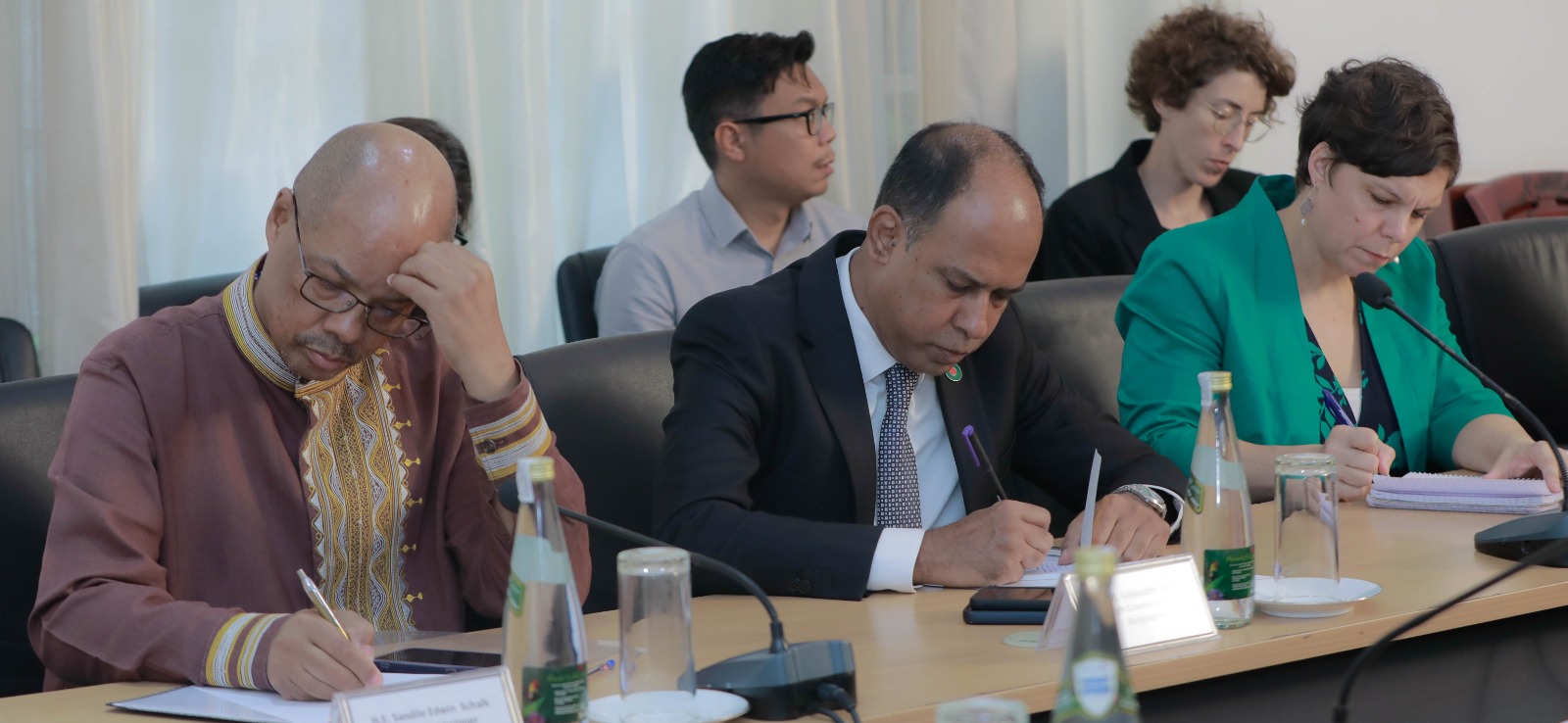
He presented the comprehensive reform package during a high-level briefing with foreign diplomats and representatives of international organisations at the Office of the Leader of the Opposition in Colombo.
The discussions focused on two controversial legislative measures currently under government consideration, namely the Protection of the State from Terrorism Bill and the Prevention of Organised Crime Bill.
Constitutional concerns
Growing opposition to the statutory proposals follows severe warnings from major legal and human rights bodies across the country.
The Human Rights Commission of Sri Lanka (HRCSL) issued an assessment on 21 October stating that the proposed organised crime legislation violated fundamental constitutional guarantees and international treaty obligations.
The commission cautioned that the measure could prove even more draconian than the 1979 Prevention of Terrorism Act, urging the Government to withdraw the draft text entirely for substantial redrafting.
Concurrently, the Bar Association of Sri Lanka called for the immediate withdrawal of the organised crime bill and demanded major revisions to the proposed anti-terrorism framework.
During his address, Premadasa emphasised that genuine national security requires robust judicial oversight rather than arbitrary state power.
He noted that safeguards must apply universally to every citizen rather than acting as political shields for elected officials or activists.
Reaffirming his party's support for combating serious crime, he insisted that statutory powers must remain compatible with judicial independence, democratic governance, and individual freedoms.
Key legislative safeguards proposed
To address institutional deficiencies and protect public liberties, Premadasa outlined five specific prerequisites for any future security legislation.
- Full public release of all expert recommendations informing the draft legislation.
- Clear and strictly proportionate statutory definitions for all criminal offences.
- Preservation of meaningful judicial discretion over remand, detention, and bail.
- Explicit legal protections against forced confessions and arbitrary search operations.
- Mandatory consultations with the Bar Association of Sri Lanka, the Human Rights Commission of Sri Lanka, and relevant civil society stakeholders prior to parliamentary enactment.
The Opposition Leader stressed that adopting these legal guarantees remains essential to ensure that Sri Lanka's counter-terrorism measures do not compromise basic constitutional rights.


Leave your comments
Login to post a comment
Post comment as a guest