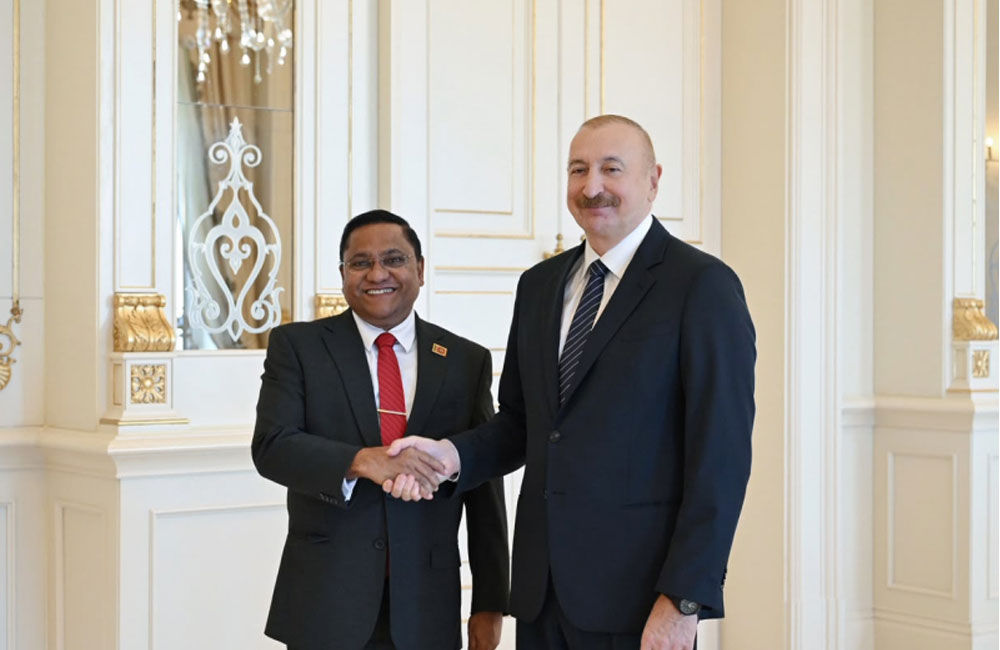
Sri Lanka’s emerging energy engagement with Azerbaijan demands scrutiny beyond diplomatic photographs and official statements. At a time when the Middle East crisis threatens energy-market stability and major powers compete for influence over strategic resources, Colombo must demonstrate that its outreach to Baku is a carefully calculated economic strategy rather than another diplomatic initiative without a clear commercial destination.
Foreign Minister Vijitha Herath’s meeting with Azerbaijani President Ilham Aliyev during the CICA summit on October 14 and 15, 2026, placed energy cooperation alongside discussions on trade, investment and tourism. Engagement with Central Asian economies could broaden Sri Lanka’s economic options. But the government has yet to establish publicly, in the information provided, whether the talks have produced concrete supply commitments, financing arrangements or a timetable for implementation.
That information gap is critical when every additional dollar spent on energy affects Sri Lanka’s fragile external finances.
The Middle East crisis has demonstrated how quickly geopolitical instability can translate into higher oil prices, disrupted shipping, rising insurance premiums and renewed inflationary pressure. Sri Lanka, heavily dependent on imported petroleum, remains exposed to these external shocks regardless of where its suppliers are located.
Azerbaijan could potentially offer another source of supply, but diversification must be assessed in practical terms. Can its producers supply the quantities and specifications required by Sri Lanka? Can shipments reach the island at competitive costs? Would payment arrangements protect scarce foreign exchange? And could supply remain reliable during a wider international confrontation?
Without answers, the promise of energy cooperation risks becoming a headline rather than a solution.
The American dimension also warrants careful examination. The United States exercises substantial influence through financial institutions, dollar-based transactions, sanctions enforcement and international diplomatic relationships. Sri Lanka, meanwhile, needs foreign investment, access to international capital and continued cooperation with development partners while implementing economic reforms.
Nevertheless, there is no evidence in the supplied information establishing that Washington has directly pressured Sri Lanka to abandon energy cooperation with Azerbaijan. Treating such pressure as an established fact would confuse geopolitical possibility with documented policy. The government should clarify whether it has received any relevant diplomatic representations and whether proposed transactions raise identifiable sanctions or compliance concerns.
The challenge is to preserve strategic independence without creating avoidable financial or diplomatic exposure. Sri Lanka should neither reject commercially attractive Azerbaijani opportunities merely because of geopolitical sensitivities nor pursue them to demonstrate defiance towards another power.
The absence of publicly specified commercial terms is particularly concerning given the country's recent experience with foreign exchange shortages, costly emergency procurement and energy-sector vulnerabilities. Any new arrangement should disclose the procurement process, pricing formula, delivery obligations, payment conditions and allocation of commercial risks, subject to legitimate confidentiality requirements.
Parliamentary oversight and independent technical assessment should precede substantial commitments. Comparisons with alternative suppliers must include the full landed cost, not merely the quoted oil price. The government should also examine whether existing refining facilities can efficiently process the proposed crude grades.
Meanwhile, discussions with Kazakhstan, Uzbekistan and Tajikistan should be assessed individually rather than presented collectively as evidence of immediate economic transformation.
Sri Lanka needs more diplomatic options, not more diplomatic promises. The Azerbaijan initiative will deserve public confidence only when it produces verifiable commercial benefits, protects consumers and strengthens energy security without compromising the country's wider international relationships.
Leave your comments
Login to post a comment
Post comment as a guest