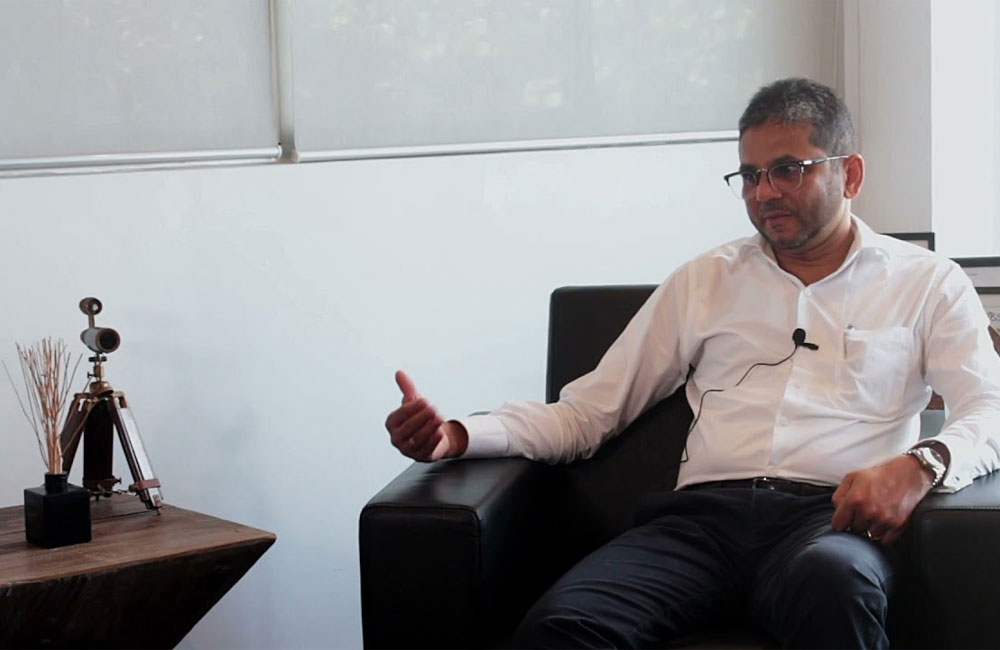
Delays over land, contracts and approvals are keeping Sri Lanka tied to expensive diesel power, WindForce PLC Managing Director Manjula Perera has warned, even as the Government seeks about Rs. 400 billion in renewable energy and battery storage investment over three years.
Perera made the warning at the Sri Lanka Economic and Investment Summit 2026, where he said the system meant to turn that ambition into electricity was struggling to move projects forward.
He cited WindForce’s 100 MW Siyambalanduwa solar project, awarded in 2022, which waited about 18 months for the Government to hand over land. Commissioning is expected by July 2027, so the project will take roughly five years from award to operation. Two 50 MW wind projects at Mullikulam, awarded to WindForce and Vidulanka in February 2026, face similar obstacles. Perera said land matters remain unresolved and the draft power purchase agreement is still with the Attorney General’s Department. The available information does not put a figure on the national loss, but prolonged delays can raise financing costs, postpone electricity production and weaken investor confidence.
The cost of waiting is considerable. Perera said renewable sources supply about 54% of electricity, while thermal power supplies around 46% but takes more than 71% of generation costs. Diesel plants provide about 14% of supply yet account for roughly 40% of costs, at an estimated Rs. 94 per kilowatt-hour. Actual savings from new renewable capacity would depend on tariffs, grid integration, financing and balancing needs. Even so, competitively priced projects could cut exposure to costly thermal generation, while delays could complicate any reduction in electricity tariffs.
Perera named three main barriers to foreign investment. These are power purchase agreements that are not sufficiently bankable, rupee-denominated tariffs for large projects and an approval process that requires more than 17 clearances. Foreign investors weigh these risks against markets that offer more predictable terms and schedules.
He also said the planned move towards competitive tendering needs careful handling. Auctions can reveal lower prices, but headline tariffs alone do not show whether a project offers value for money. Land readiness, financing conditions, realistic construction deadlines and enforceable contract terms must also be assessed.
On battery storage, Perera said government tenders cover 160 MW, 250 MW and a further 150 MW. The first tranche is nearing commissioning, the second is expected to follow and the third is due to be awarded soon. Storage can help absorb variable solar and wind output and support grid stability, which may reduce the need to keep expensive thermal plants running for system support.
Technology alone cannot fix institutional weakness, he cautioned. Splitting the Ceylon Electricity Board into separate entities would achieve little unless the successor bodies have enough staff and commercial expertise.
Unless contracts become financeable, approvals speed up and land disputes are settled, Sri Lanka will go on paying a diesel premium while billions of rupees in green investment wait in procedural queues.
Leave your comments
Login to post a comment
Post comment as a guest