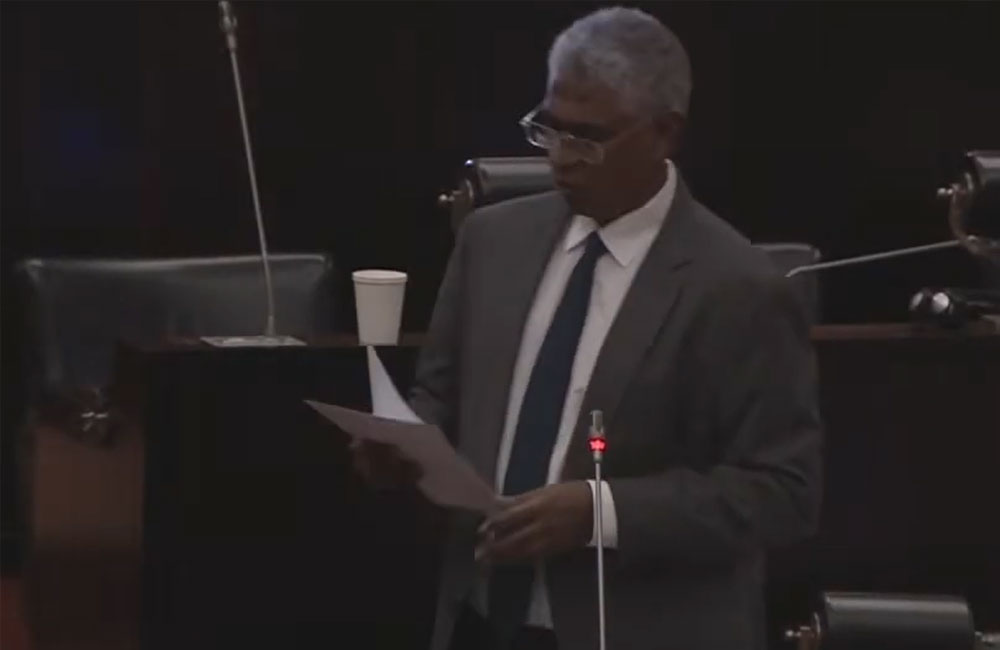
Member of Parliament Faiszer Musthapha has called on Parliament to urgently restrict social media access for children under 16, warning that unregulated use is exposing the nation's youth to sexual exploitation, cyberbullying and rising suicide rates.
Musthapha raised the issue through an adjournment motion in the House, citing severe risks to the mental health, safety, education and overall well-being of Sri Lankan children.
He revealed a series of statistics to illustrate the scale of the crisis, telling Parliament that Sri Lanka ranked 20th globally for cyberspace-related threats, with 9.1 million distinct threats detected in a single year.
He said 52.8 percent of young people in the country accessed the internet, with the average age of first access standing at just 13, and that 46.3 percent of children had communicated with strangers online, of whom 27.9 percent had gone on to meet those strangers in person.
He also reveleade that 28 percent of young internet users had experienced online violence, with an equal proportion having received indecent messages, while 27 percent had fallen victim to cyberbullying and extortion.
Musthapha said nearly one in five children had had indecent images of themselves shared online, often after private photographs were betrayed by online contacts, and that the availability rate of child sexual abuse material stood at 27.8 per 1,000.
He said 92 percent of victimised children did not report such incidents, largely out of fear of social stigma.
Referring to international precedent, Musthapha pointed to the United Kingdom's proposed restrictions under its Children's Well-being and Schools Bill and Online Safety Act, as well as Australia's Social Media Minimum Age Act, noting that Sri Lanka's proposed restrictions would similarly apply to platforms such as Instagram, TikTok, YouTube, Snapchat, Facebook and Twitter, while exempting essential services such as WhatsApp.
He said he had already submitted a private member's bill on the matter, which the Justice Minister had confirmed was under legal drafting, and he urged the Government to expedite the legislation without seeking personal credit for the initiative.
Musthapha stressed that the proposal was not intended as an anti-technology measure, acknowledging the genuine value of digital tools while insisting that children required legal protection from serious online harms.
He said many parents had told him they were no longer able to control their children's device use and would welcome a legal restriction that gave them a firm basis to enforce boundaries.
He also lamented that children who once played outdoors now regarded their phones as their closest companions, warning that psychologists had flagged growing social isolation and addiction among young people as a result.
Musthapha appealed to Parliament to act collectively and without delay to introduce effective age verification systems and hold social media platforms accountable, warning that every day of delay exposed more children to abuse and exploitation.
Leave your comments
Login to post a comment
Post comment as a guest