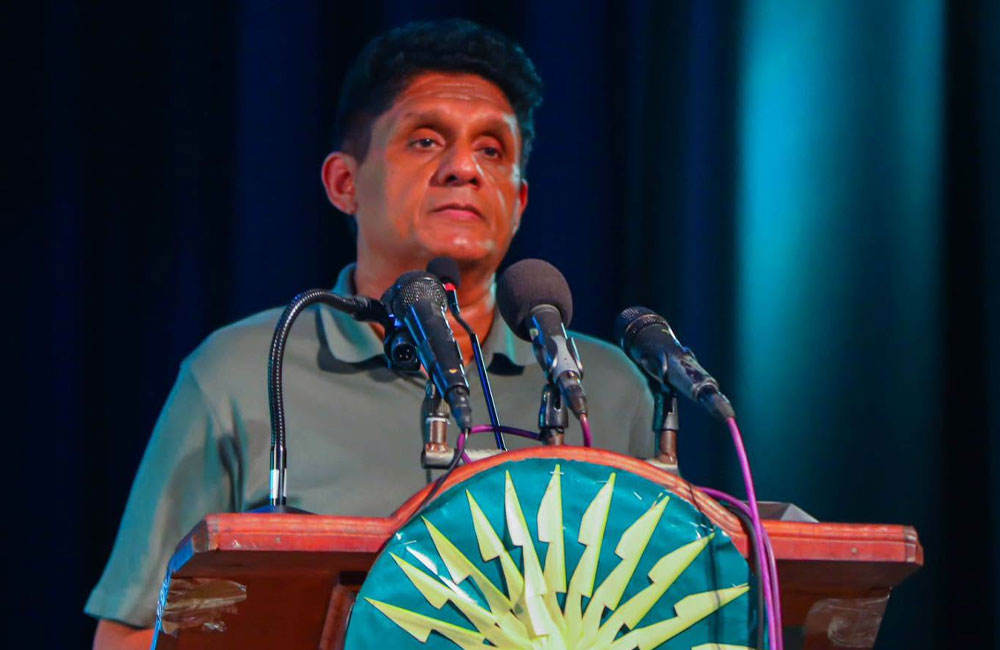
Opposition Leader Sajith Premadasa has proposed introducing a low-cost ticketing system for tourist attractions to draw visitors towards lesser-known destinations and ease congestion at Sri Lanka's most popular wildlife parks.
He outlined the proposal while addressing the Parliamentary Caucus on Climate Change, where he raised a set of concerns spanning tourism management, wildlife conservation and the resourcing of the Department of Wildlife Conservation.
Premadasa said an affordable ticketing system could encourage tourists to explore a wider range of destinations, thereby helping to relieve the heavy traffic and overcrowding currently seen at national park entrances, while simultaneously supporting the growth of tourism in areas that presently attract far fewer visitors.
He also drew attention to a longstanding shortage of veterinary surgeons within the Department of Wildlife Conservation, noting that although the department requires 33 such professionals, only 17 are currently in service, a shortfall he said has persisted for decades.
According to the Opposition Leader, wildlife veterinary surgeons play an essential role in managing human-wildlife conflicts and treating animals such as elephants and leopards, yet continue to lack adequate legal recognition and powers under the Fauna and Flora Protection Ordinance.
He called for these professionals to be properly integrated into the department's structure, alongside clearer pathways for career advancement and promotion.
Turning to water management within protected areas, he proposed that accumulated silt be removed from reservoirs in national parks during the dry season to improve their capacity to retain water.
He pointed to the Yala National Park in particular, where water levels in tanks have fallen sharply amid the current dry conditions, forcing authorities to transport water by bowser to some of the smaller water sources.
He also stressed the need for better facilities and support for wildlife officers, noting that their duties extend around the clock given that human-wildlife conflicts occur both inside and outside designated wildlife areas.
Leave your comments
Login to post a comment
Post comment as a guest