Calls have grown for urgent state regulation of app-based transport and delivery companies operating in Sri Lanka, following revelations that their profits have risen by more than fifty per cent in recent times.
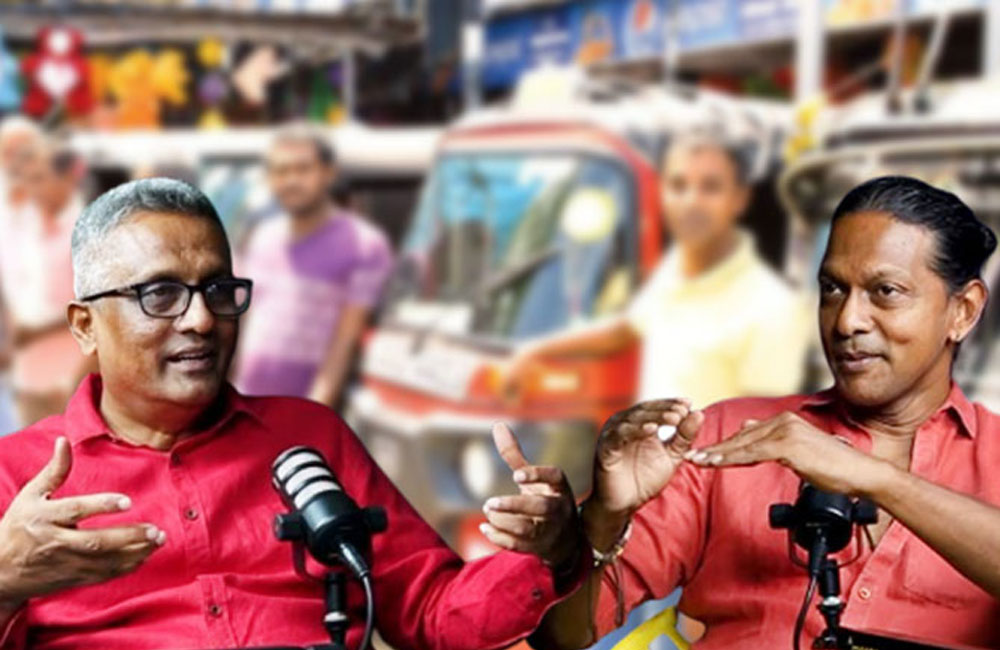
The issue was raised during a discussion on the Ideas Front programme, hosted by veteran journalist Narada Bakmeewewa, which examined the socio-economic impact of the profit surge on the country's workforce and consumers.
Joining the discussion, political analyst and Leader of the Samabima Party, Deepthi Kumara Gunarathne, said the growth of the three-wheeler sector reflected the scale of Sri Lanka's informal economy, which he estimated accounted for roughly sixty per cent of the country's overall economic activity.
He noted that the sector, originally introduced as a temporary employment alternative in the late 1990s, had since become the primary livelihood for a large section of the workforce, largely because the state had failed to provide a policy capable of offering formal employment to young people entering the labour market.
Gunarathne argued that the integration of this informal workforce into technology driven app platforms represented the next stage of digital capitalism, one that had brought traditional, human relationship based service provision entirely under algorithmic control.
He warned that the expansion of this model into sectors such as food delivery carried the risk of deepening social isolation among workers.
The discussion further challenged the notion that workers on these digital platforms enjoyed genuine independence or freedom, with participants describing such claims as largely illusory.
It was noted that while workers bore the full costs of vehicle depreciation, fuel and health risks, they received little in the way of real social protection, and were instead subjected to strict control through algorithmic rating systems imposed by the companies.
Bakmeewewa observed that standards of professional training, discipline and courtesy that had once characterised the sector had eroded significantly under the current app-based model.
Both speakers agreed that while businesses retained a legitimate right to profit, state intervention and formal regulation were essential to prevent these digital platforms from operating as unchecked monopolies.
It was stressed that the Ministry of Finance and other relevant state institutions needed to urgently draw up limits and a legal framework governing app-based companies.
Gunarathne warned that the absence of such regulation could see local small-scale businesses fall entirely under the control of these digital platforms, eroding worker rights and generating significant social tension across the country.
Leave your comments
Login to post a comment
Post comment as a guest