Benazir Bhutto assassination: How Pakistan covered up the killing

By Owen Bennett Jones

27 December 2017

Benazir Bhutto was the first woman to lead a Muslim country. The decade since an assassin killed her has revealed more about how Pakistan works than it has about who actually ordered her death.

Bhutto was murdered on 27 December 2007 by a 15-year-old suicide bomber called Bilal. She had just finished an election rally in Rawalpindi when he approached her convoy, shot at her and blew himself up. Bilal had been asked to carry out the attack by the Pakistani Taliban.

Benazir Bhutto was the daughter of Zulfikar Ali Bhutto, Pakistan's first democratically elected prime minister. His political career was also brought to a premature end when he was hanged by the military regime of General Zia-ul Haq. Benazir went on to become prime minister twice in the 1990s, but she was always distrusted by the military, which used corruption allegations to remove her from power.

At the time of her death, she was making a bid for a third term as prime minister. The assassination caused widespread civil unrest in Pakistan. Bhutto's supporters took to the streets, putting up roadblocks, lighting fires and chanting anti-Pakistan slogans.

The general and the 'threatening' phone call
A decade later, the general in charge of Pakistan at the time has suggested people in the establishment could have been involved in her murder.

Asked whether rogue elements within the establishment could have been in touch with the Taliban about the killing, General Pervez Musharraf replied: "Possibility. Yes indeed. Because the society is polarised on religious lines."

And, he said, those elements could have had a bearing on her death.

It's a startling statement from a former Pakistani head of state. Normally military leaders in Pakistan deny any suggestion of state complicity in violent jihadist attacks.

Asked whether he had any specific information about rogue elements in the state being involved in the assassination, he said: "I don't have any facts available. But my assessment is very accurate I think... A lady who is in known to be inclined towards the West is seen suspiciously by those elements."

Musharraf has himself been charged with murder, criminal conspiracy for murder and facilitation for murder in relation to the Bhutto case. Prosecutors say that he phoned Benazir Bhutto in Washington on 25 September, three weeks before she ended eight years in self-imposed exile.

Long-serving Bhutto aid Mark Seighal and journalist Ron Suskind both say they were with Bhutto when the call came in. According to Seighal, immediately after the call, Bhutto said: "He threatened me. He told me not to come back. He warned me not to come back.

Musharraf said he would not be responsible for what would happen to Bhutto if she returned, Seighal told the BBC. "And he said that her safety, her security was a function of her relationship with him."

Musharraf strongly denies making the call and dismisses the idea that he would have ordered her murder. "Honestly I laugh at it," he recently told the BBC. "Why would I kill her?"

The deadly plot

The legal proceedings against Musharraf have stalled because he is in self-imposed exile in Dubai. Benazir Bhutto's son and political heir, Bilawal, has rejected his denials out of hand.

"Musharraf exploited this entire situation to assassinate my mother," he said. "He purposely sabotaged her security so that she would be assassinated and taken off the scene."

While Musharraf's case is on hold, others have been acquitted of the crime. Within weeks of the assassination, five suspects had confessed to helping the 15-year-old Bilal assassinate Bhutto at the behest of the Pakistani Taliban and al-Qaeda.

The first person to be arrested, Aitzaz Shah, had been told by the Pakistan Taliban that he would be the suicide bomber chosen to kill Bhutto. Much to his annoyance, he was kept in reserve in case the attempt failed.

Two others, Rasheed Ahmed and Sher Zaman, confessed they were mid-ranking organisers of the conspiracy and two Rawalpindi-based cousins, Hasnain Gul and Rafaqat Hussain, told the authorities that they provided accommodation to Bilal the night before the killing.

Even though these confessions were subsequently withdrawn, phone records showing the suspects' locations and communications in the hours before Bhutto's murder seem to corroborate them. Hasnain Gul also led the police to some physical evidence in his apartment.

DNA from Bilal's body parts gathered after his attack and tested in a US lab matched the DNA on some training shoes, cap and a shawl Bilal had left behind in Hasnain's residence when he put on his suicide vest.

Just a few months ago prosecutors were confident these alleged plotters would be convicted. But in September the case collapsed, with the judge declaring that procedural errors in the way the evidence was gathered and presented to the court meant he had to acquit them.

The five are still in detention pending an appeal.

Who was Benazir Bhutto?

A dominant figure in Pakistani politics, Ms Bhutto served twice as the country's prime minister, from 1988 to 1990 and from 1993 to 1996.

Young and glamorous, she successfully portrayed herself as a refreshing contrast to the male-dominated political establishment.

But after her second fall from power, she became associated in the eyes of some with corruption and bad governance.

Ms Bhutto left Pakistan in 1999 but returned in October 2007 after then-President Musharraf granted her and others an amnesty from corruption charges.

She was set to take part in an election called by Mr Musharraf for January 2008.

But her homecoming procession in Karachi was bombed by suspected militants. She survived the attack, which killed well over 150 people, but would be assassinated two months later.

The husband who became president

In Pakistan, it is commonplace to hear people accuse Benazir Bhutto's widower Asif Zardari of having organised the assassination. The claim is normally based on the observation that since he became president after her death he was the one who benefited most.

The conspiracy theorists, however, have not produced a single shred of evidence to indicate that Asif Zardari was in any way involved in his wife's death. He has denied the allegation in the strongest possible terms. Those who make the allegation, he said, should "shut up".

Asif Zardari faces another accusation: that despite having the powers of the presidency, he failed to properly investigate his wife's murder. Secret official documents relating to the investigation and obtained by the BBC show that the police inquiries were so poorly managed as to suggest they never wanted to find guilty parties beyond the low-level plotters they had already arrested.

The inadequacies of the police investigations were especially apparent after an unsuccessful attempt on Bhutto's life on 18 October 2007 - two and a half months before she was killed. Two suicide bombers attacked her convoy and killed more than 150 people. It remains one of the deadliest attacks ever mounted by violent jihadists in Pakistan.

The police work was so half-hearted that the bombers were never even identified.

The leader of the inquiry, Saud Mirza, has said that one man he established to have been a bomber had distinctive features, suggesting he came from a long-standing but small Karachi-based community of people of African descent. This potentially significant clue about the suspected bombers identity was never released to the public.

Former President Zardari answers criticisms about the thoroughness of the police work by pointing out that he encouraged the work of Scotland Yard in relation to the murder and secured the appointment of a UN commission of inquiry to examine the circumstances of her death.

That inquiry, however, says it was repeatedly and blatantly blocked not only by the military but also Zardari's ministers. "There were many people in the establishment that we wanted to interview but they refused," said Heraldo Munoz, the head of the UN commission.

And he said some of the obstacles came from the politicians as well as the military. As the investigation progressed, he said, the safe house the UN team used was withdrawn, as were the anti-terrorist personnel who were protecting the UN staff.

A trail of dead people...

That there was a cover-up is beyond doubt. A BBC investigation found evidence suggesting that two men who helped the teenage assassin reach Benazir Bhutto were themselves shot at a military checkpoint on 15 January 2008. A senior member of the Zardari government has told the BBC that he believes this was "an encounter" - the term Pakistanis use for extra-judicial killings.

Nadir and Nasrullah Khan were students at the Taliban-supporting Haqqania madrassa in north-west Pakistan. Other students associated with the seminary who were involved in the plot also died. One of the most detailed official documents obtained by the BBC is an official PowerPoint presentation given to the Sindh provincial assembly.

It names Abad ur Rehman, a former student at the madrassa and bomb-maker who helped provide the suicide jacket used to kill Benazir Bhutto. He was killed in one of Pakistan's remote tribal areas on 13 May 2010.

Then there was Abdullah who, according to the Sindh assembly presentation, was involved in the transportation of the suicide vests ahead of the Rawalpindi attack that killed Bhutto. He was killed in Mohmand Agency in northern Pakistan in an explosion on 31 May 2008.

One of the most high-profile deaths related to the assassination was that of Khalid Shahenshah, one of Bhutto's security guards. Shahenshah was within a few feet of Bhutto as she made her final speech in Rawalpindi. Phone footage shows him making a series of strange movements for which no one has offered any reasonable explanation.

Although he kept his head completely still, he raised his eyes towards Bhutto while simultaneously running his fingers across his throat. Pictures of his gestures went viral and on 22 July 2008, Shahenshah was shot dead outside his home in Karachi.

The next victim was the state prosecutor, Chaudhry Zulfikar. A lawyer with a reputation for high degrees of both competence and doggedness, he told friends he was making real progress on the Bhutto investigation.

... and one who turns out to be alive

Finally, there is a man who was said to be dead but, in fact, is still alive. In their confessions, the alleged plotters said that on the day of the murder a second suicide bomber named Ikramullah accompanied Bilal. Once Bilal had succeeded in his task, Ikramullah's services were not required and he walked away unharmed.

For years Pakistani officials insisted that Ikramullah had been killed in a drone strike. In 2017 chief prosecutor Mohammad Azhar Chaudhry told the BBC evidence gathered by Pakistani investigating agencies, relatives and government officials established that "Ikramullah is dead".

In August 2017, however, the Pakistani authorities published a 28-page list of the country's most wanted terrorists. Coming in at number nine was Ikramullah, a resident of South Waziristan and involved, the list said, in the suicide attack on Benazir Bhutto.

The BBC understands that Ikramullah is now living in eastern Afghanistan where he has become a mid-ranking Pakistan Taliban commander.

So far the only people punished in relation to the murder of Benazir Bhutto are two police officers who ordered the murder scene in Rawalpindi to be hosed down.

Many Pakistanis regard those convictions as unfair, believing that the police would never have used the hoses without being told to do so by the military.

It suggests, once again, a cover-up by Pakistan's deep state - the hidden network of retired and serving military personnel who take it upon themselves to protect what they consider Pakistan's vital national interests.

Source: BBC

Benazir Bhutto assassination: How Pakistan covered up the killing

Non-interference with judiciary is a dire need in Sri Lanka

Sri Lanka: A comprehensive understanding of non-interference with judiciary is a dire need in Sri Lanka

By Nagananda Kodituwakku and Basil Fernando

It was heartening to hear from the incumbent Chief Justice, Priyasath Dep, that Sri Lanka’s judiciary is free from any interference. This statement comes as a relief, given that we can recall a long period of the most despicable forms of the interference with the judiciary in Sri Lanka and how, unfortunately, even the Supreme Court learned to adjust to such interference. It all started with JR Jayawardene, the first Executive President, who believed that being the Executive President meant having the judiciary under his thumb. The whole constitutional design was changed to achieve this purpose. Unfortunately, this constitutional design still remains intact. Other Executive Presidents followed President Jayawardene’s example since then.

The worst betrayal of the very notion of the independence of the judiciary happened when a Chief Justice – Sarath Nanda Silva as Chief Justice – sacrificed the very notion of an independent judiciary and became a servant of the Executive Presidential system. The then government made the path clear for him by leapfrogging him from the office of President of the Court of Appeal to the office of the Chief Justice.

In a most sophisticated way, he sacrificed the independence of the judiciary by severing the procedural law from the substantive law, thereby making procedural law a plaything in the hands of the Executive President. This, accompanied by the most dramatic forms of bullying of the lawyers, and also some litigants, created a very abnormal judicial system in Sri Lanka. The most glaring examples of this bullying were the two cases relating to contempt of court, which brought Sri Lanka into international disrepute. The cases were those relating to Michael Emmanuel Fernando (known to the public as Tony Fernando) and SB Dissanayake, who was then a minister in Chandrika Bandaranayke’s cabinet.

The United Nations Human Rights Committee, in their Opinions, condemned both these judgements of the Supreme Court, declaring them to be violations of the human rights of the two persons concerned and recommending to the Sri Lankan government that they should make contempt of court laws in keeping with international norms and standards.

The trend of interference took an even uglier form during the regimes of Mahinda Rajapaksha. The culmination of this was the creation of a Chief Justice with the name Mohan Peiris, who even went before the newly elected government of Maithripala Sirisena to declare that he was willing to do anything that the Executive wanted him to. Such is the sad tale of the interference with the independence of the judiciary in Sri Lanka. What Mohan Peiris was saying to the new government was that he was willing to do what he did for Mahinda Rajapakshe’s regime. It is a credit to the new government that they not only rejected the offer, but that both President and Prime Minister themselves stated publicly the offer being made by Mohan Peiris. Under these circumstances, it is further heartening to hear from the incumbent Chief Justice that there is no longer any such interference with the judiciary.

However, the issue that needs to be considered is that such long years of terrible interference do not fail to leave traces within the system. What is required of any people concerned about what is at risk when the judiciary is interfered with is to do their utmost to reflect, in the most honest fashion possible, as to whether everything of such a dark period has been erased and gotten rid of so quickly.

In this, it is essential to consider what interference with the judiciary means in a comprehensive sense. Interference does not merely mean not receiving telephone calls and other forms of direct instructions on how judges should decide cases. The real test is as to whether the system of law and the administration of justice have gotten back to the point where it can be honestly claimed that the system functions well and that every element of the system has gotten rid of the corruption that it had been exposed to. Such victories should not be lightly claimed for all aspects of individual freedoms and the whole life of the nation depends on such things, like the way blood runs through the human body. The most essential element to consider is whether the competence of the judiciary that has suffered past interference has been restored fully.

In scrutinizing this aspect, it is essential to consider the fact that one of the most prominent ways of interfering with the judiciary was to make political choices about judicial appointments. For a litigant that goes before the courts, and for the lawyers who represent them, their faith in the system will very much depend on their belief that the judiciary has overcome the problems of the unprincipled way in which some judges were appointed in the not-so-distant past and that the practice has been brought to an end. This task of scrutinizing the system is not only a task for the Executive, but also for the Judiciary itself, and also the legal profession and the public at large. They should all be able to say that a damned and dark period is over, and that we are in a period where new light is shining. The real question is as to whether such a claim can be made honestly.

Does the legal process in Sri Lanka function sufficiently well that we could claim today that the due process of law can be assured within our system? If one is to go by the large numbers of litigants, who are the ultimate judges on this issue, we cannot yet claim such a situation has dawned.

There is an even clearer test. Can it be said that the administrative and political systems of Sri Lanka have gotten rid of corruption as a major issue? Of course, given the level of corruption that prevails throughout society, no one can claim that we have arrived at that point. The test of the independence of the judiciary is the test of the efficiency of the legal system to control corruption, abuse of power and the interferences into the freedoms of the individual.

The real test that the system is beyond the interference of anybody is, ultimately, whether the administration of justice is functioning well. In a practical sense, the test is as to whether the country’s corruption-control body (CIABOC) is adequately competent and efficient to investigate allegations of corruption and prosecute the cases successfully. If the CIABOC is at fault, the country’s judiciary shall take it to task.

*The recent report furnished to the UN High Commissioner for Human Rights by the activist-lawyer, Nagananda Kodituwakku, who fights government corruption in all three organs of the government suggests that there is a long way to go to.

Non-interference with judiciary is a dire need in Sri Lanka

India's Neighborhood-First Diplomacy Coming Apart at the Seams

By Surajkumar Thube

With talk of inviting ASEAN members for the upcoming Republic Day celebrations in India, New Delhi’s diplomatic overtures toward the Southeast Asian countries are increasingly clear. At the same time, with India set to look for greener pastures beyond South Asia, it’s hard to ignore the palpable fissures developing in the so-called “neighborhood-first” policy. The grand initiative to increase bonhomie with neighboring countries since 2014 has become hopelessly mired in episodic yet fundamental practical diplomatic hurdles. This anxiety can be sensed through recent developments, beginning with Nepal and Bangladesh.

The victory of the “left alliance” in Nepal has been seen as a failure of Indian diplomacy in the region since 2015. Former (and likely future) prime minister K.P. Oli’s frosty relations with the Indian government, especially during their intervention in the constitutional crisis and the five month economic blockade that followed, further intensified the already existing tension between the two countries. The left alliance is much closer to the Chinese, and especially intent on not relying on Indian investment — almost akin to King Gyanendra’s positive relationship with the Chinese authorities in 2005. Oli continues to evince a similar interest in opening up the economy in a big way to the Chinese.

Nepal is one existing unresolved issue; another issue concerning Bangladesh has the potential to spoil a relatively stable relationship. The Rohingya crisis has been conveniently ignored till date by both parties. However, both of them will be compelled to address the issue soon, especially with the first draft of the National Register of Citizens of Assam now on the negotiating table. The Indian government faces the dilemma of either fostering a peaceful domestic situation or protecting one of its few stable relationships with a neighbor. The possible Indian option of deportation can exacerbate this nervousness, as Bangladesh has been vocal recently in expressing their displeasure with India for not pressuring Myanmar to take back the refugees.

Apart from dealing directly with its neighbors, India has to deal with the overweening economic clout of China. Along with China’s continuing diplomatic heft across Asia, it has also significantly managed to increase its presence in the Indian Ocean. The recent China-Maldives Free Trade Agreement is a case in point. The covertness and the suddenness with which it was made public has irked the Indian establishment. Another development saw the handing over of Hambantota port in Sri Lanka to the Chinese state-run company, China Merchants Port Holdings. In its relationship with China, Sri Lanka has made it amply clear: Colombo is not relying entirely on economic assistance coming from India. In fact, there has been virtually no progress on India’s comprehensive economic partnership with Sri Lanka. India seems to have fallen back again as the Chinese FTA with Sri Lanka is underway.

The Chinese seem to be winning not just economically but also in the diplomatic race, especially when one takes into account the ambiguous position of Bhutan vis-a-vis the stationing of around 8,000 Chinese troops spread across the Chumbi valley. Bhutan, even while stating clearly their stable relationship with India, cannot afford to incense the Chinese, thus sidelining the immediate, tangible economic investment on offer. India-Bhutan relations, irrespective of the Chinese factor, have seen tensions develop in the recent past with Bhutan’s reluctance to give a green signal to the BBIN network over “environmental issues.” India has still not been able to convince Bhutan over the larger benefits of this initiative.

INDIA 2

 China and India have been engaged in a standoff in the Doka La area near the Bhutan tri-junctionsince June.

In Afghanistan, the country with which India has arguably the best relationship in the region, the economic investment in the Zerang-Delaram highway will not easily translate into political cooperation, let alone a geopolitical strategic partnership. Plus, Pakistan’s Gwadar port, propelled by the increasing consolidation of the China-Pakistan Economic Corridor, appears more commercially viable than Chabahar port in Iran, which is envisioned as a way to link India and Afghanistan’s trade. Meanwhile, India will struggle to make Afghanistan more politically stable. Iran, which is showing no real signs of supporting India on the geopolitical front, let alone dealing with the Afghan Taliban directly, will leave it to India to bridge this all important gap.

At the moment, the optimism surrounding the invitation to SAARC countries for Prime Minister Narendra Modi’s swearing-in ceremony in 2014 has petered out. Some of these developments are largely of India’s own doing, while the rest emanate from a rapidly rising China. In either case, India has to re-imagine its neighborhood policy afresh.

Surajkumar Thube recently completed his post graduate work in Political Science from Jamia Millia Islamia, New Delhi. He has previously contributed to India Today’s DailyO, Countercurrents, Raiot, The Hoot and The Book Review magazine.

PIC: MEA India


India's Neighborhood-First Diplomacy Coming Apart at the Seams

Can the Maldives save its coral reefs?

Alongside the famed Great Barrier Reef, the Maldives is also home to some of the most enchanting and diverse coral reefs in the world, its crystal clear waters bursting with colour and life.

However, since 2014 this tropical paradise has been struck by severe coral bleaching, affecting between 60 percent and 90 percent of its coral, depending on the area.

Rising temperatures

Corals become bleached when under stress because of changing conditions, such as rising seawater temperature. This causes the coral to expel the algae living in its tissues, turning white.

The coral is not dead, but it is starving, as the algae provide up to 80 percent of its nutrients. Prolonged higher temperatures can kill the corals completely, with a cascade of negative effects on the many species that depend on them, including the human communities that they support.

Bleaching episodes typically last one year, but the most recent has been going since 2014. Australia's Great Barrier Reef has also been affected, with more than two-thirds of it experiencing "shocking" amounts of bleaching.

"In 2014 reefs around the world were hit with one of the worst coral bleaching events on record", said Thomas le Berre, a French coastal oceanographer who is responsible for some of the top environmental projects in the Maldives.

The previously vibrant corals, which help attract over one million tourists a year to the archipelago, have turned into a ghostly shadow of their former self.

Le Berre says part of the blame goes to El Niño, a cyclical weather event that takes place every few years resulting in warmer waters passing through the Pacific and the Indian Ocean. Combined with global warming, it has seen water temperature reach new highs of 34 degrees in some area, causing the corals to go beyond their thermal limit, which results in bleaching and sometimes death.

A study conducted by the University of Exeter confirms that, as a result of a strong El Niño in 2016, an increase in surface ocean temperatures has led to a major coral die-off in the Maldives. It has also found that some species of fish, particularly parrotfish, are eroding the reefs more intensely following the bleaching event.

Coral nurseries

According to Le Berre, although bleaching is "quite low on the government's list of priorities" he is working closely with them with them to ensure it is on their agenda. His project, the Reefscapers Coral Reef Restoration programme, aims to make the Maldivian reefs resilient to these changes in temperature and increase their rate of regeneration.

Using metal frames, small branches of coral can be attached and spread out to create 'coral nurseries'.

Corals compete for the nutrients in the immediate environment around them, so by spreading them out, they can recover faster. Using this method, researchers here have seen a four-fold increase in growth rates, over an array of about 560 frames.

Lost habitat

Recovery can take a long time. The last severe bleaching event was in 1998 and it took almost 12 years for the reefs to recover.

Worryingly, the bleaching affects not just corals: "Habitat for small fish is also lost," said Shiham Adam, the Maldives' Minister for Fisheries and Agriculture.

Great Barrier Reef 'cooking and dying' as seas heat up, warn scientists

"Long-nose hawk fish feed exclusively on live corals, and they are now almost gone. Butterflyfish abundance also is gone."

The Four Seasons and The Banyan Tree in the Maldives are both leading the charge, with their own team of researchers leading coral recovery programs: "it's very difficult for us to monitor the coral bleaching so it's important for us to work very closely with some of the resorts," sad Thoriq Ibrahim, Minister of the Environment.

But some relief most come from a more global perspective: "The Paris Agreement was a huge milestone for us in progress to minimizing global warming," Ibrahim added.

"This is what we need to happen in order to save our reefs."

Source : CNN

Can the Maldives save its coral reefs?

From owning a home to feeling at home

By Meera Srinivasan
(The Hindu)

S. Indira Gandhi owns a brand-new house now. She is one of the first few from Sri Lanka’s hill country Tamil community – that has a two century-history in the island – who can call this home, and the piece of land beneath it, her own.

A full-time worker in a tea estate, the 33-year-old, along with her husband, is busy giving finishing touches to her cement-walled home in Dayagama, in Nuwara Eliya district in the Central Province. They have recently cut a path leading to the entrance of their home, where saplings bearing sprightly pink flowers pop up from either side. For the young couple, the home is much more than a secure place of residence, or a permanent dwelling.

Longstanding demands

From the time the British brought down hundreds of thousands of Tamils from south India in the 19th century to Sri Lanka, successive generations have been toiling in the country’s plantations. Even today, most of them live in colonial-era line rooms — closely packed match-box like dwellings on the hills — and many still work in the estates in difficult working conditions and with poor wages. Their story is better known as the global rise of the famed Ceylon Tea, a product that fetches precious foreign revenue, about $1.2 billion in 2016.

Following the transition from being stateless to becoming citizens in 2003, the ongoing change from being landless to owning a modest house on a small plot marks another significant shift for the community. Neither was an outcome of state benevolence. In fact, both followed persistent struggles by the nearly million-strong community and larger political dynamics.

Houses such as Indira Gandhi’s have been built by the Indian government as part of an initiative to construct 14,000 dwellings for Hill Country Tamils, to supplement the Sri Lankan government’s own efforts towards providing housing in the region. In an earlier project, India built 46,000 homes in the island’s Tamil-majority North and East for the war-displaced.

Malayaha (Hill Country) Tamils are quick to appreciate India’s attention to their community. As Tamils of most recent Indian origin here, they have been invisible not just to the Sri Lankan state, but also to New Delhi and Tamil Nadu for most part. Without doubt, they feel some affinity towards Tamil Nadu and India, through ancestral and cultural links. “My father gave me that name because I was born the day Indira Gandhi died,” says her namesake, smiling brightly.

All the same, many in her generation feel that the oft-used “Indian-origin” tag is both dated and distant. “Even my national ID defines me as a ‘Sri Lankan estate worker’,” says her husband, K. Vijayakumar. “We are people of this country.” That is how they would like to frame their demands to the state – in the unmistakable voice of a rightful citizens, without tags that bear the baggage of uneasy histories.

In an apparent recognition of that emphatic voice, the Maithripala Sirisena-Ranil Wickremesinghe government put out an ambitious National Plan of Action for the social development of the plantation community, spanning five years beginning 2016. Among other initiatives, the plan envisions building 1,60,000 homes, financed partly with a government grant and the remaining with a 7.5% interest-loan. About 30,000 homes have been constructed so far.

For pensioner E. Sellappan, his new home in Hauteville Puram, built by the Minister of Upcountry New Villages, Estate Infrastructure and Community Development, is the only asset for his children. “This sonda veedu (own home) is the first recognition of my labour for my 36 years’ work at the estate,” he says.

The road ahead

The government points to its share of challenges. Despite a widespread campaign from workers for 20 perches land each, the government could manage only seven (about 2,000 square ft). “Finding land is our main challenge. The plantation companies are rather reluctant to part with productive land, or end up giving land that has no easy access to the main road,” says M. Vamadevan, an adviser to the Minister.

The gap between required resources and the actual allocations is also glaring. While the national action plan points to an estimated 15 billion Sri Lankan rupees investment in 2018 needed for the project – it will cost 70 billion rupees over five years – the annual allocation in the recent budget is only 2 billion rupees.

Housing is only one of the many long-ignored demands of the workers, who face historic neglect and exploitation. From education, to health to fair wages, many of their concerns remain unaddressed.

“Even if wasps attack us, we have to put in our own money and get treated. Our struggle for a minimum wage of 1,000 (Sri Lankan) rupees earlier this year also failed after our political leaders signed a collective agreement with the companies. We are now stuck with 630 rupees a day,” says estate worker R. Pushparani, squinting her eyes against the glaring sun, while she rapidly plucks tea leaves with both hands.

In pointing out their current reality, she highlights the difference between a few workers owning homes, and all of them feeling at home.


From owning a home to feeling at home
Ownership of modest homes is transformative for Sri Lanka’s hill-country Tamils

In Their Absence: Families of the Disappeared Share Treasured Keepsakes

Photos and content courtesy Maatram.org

As of today, the families of the disappeared have been protesting, across the North and East. In some areas, it has been over 290 days. Their pleas, to provide details about what happened to their families, have yet to be answered. Five of the protesters have died since the protests began. In light of Human Rights Day, which falls on December 10, Groundviews translated this series, to highlight their continuing struggle

All names have been withheld to maintain the privacy of the individuals interviewed.

Maatram:

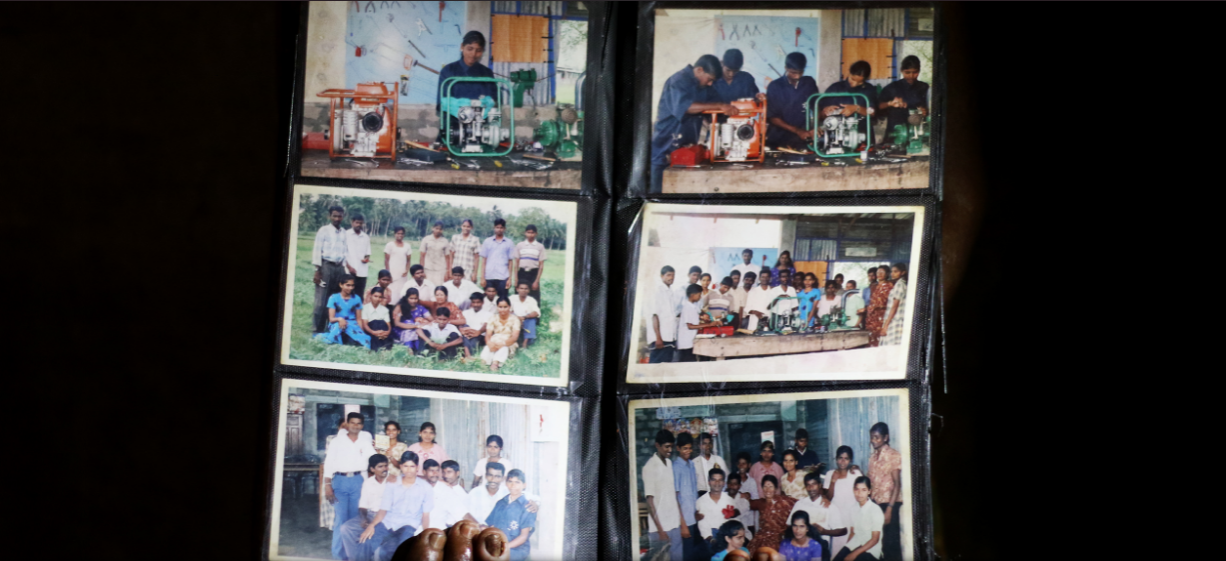
“Do you have anything that reminds you of your son/daughter/husband/grandchildren? Something that they used?”

Mother/Father/Wife/Sister/Grandmother:

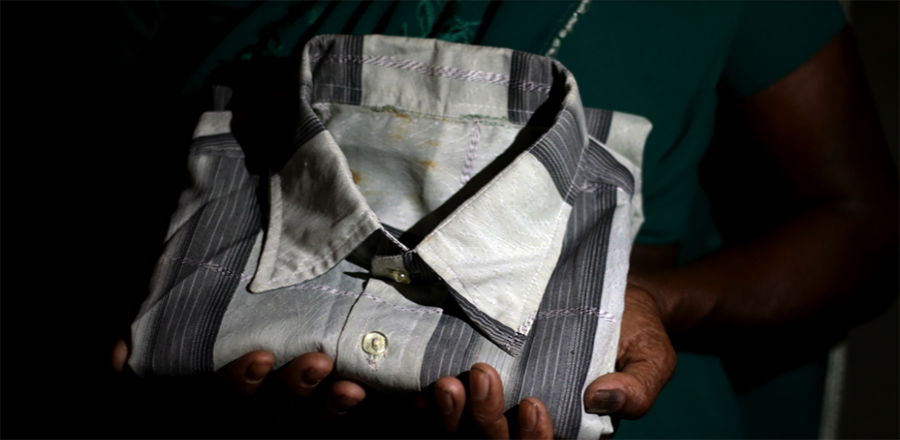
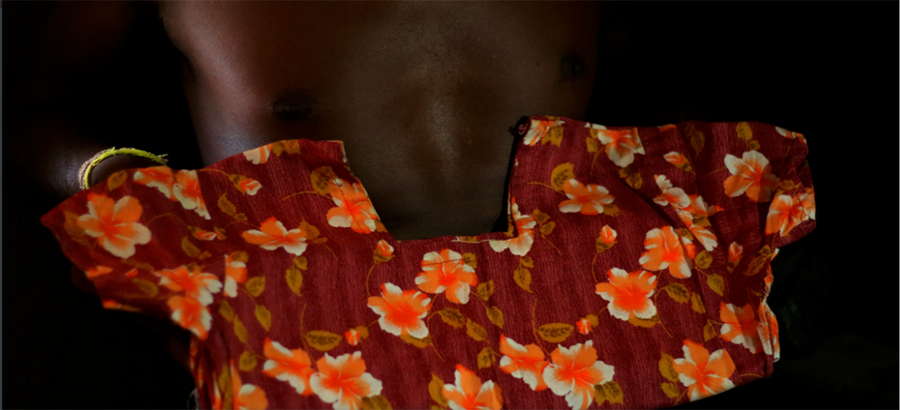
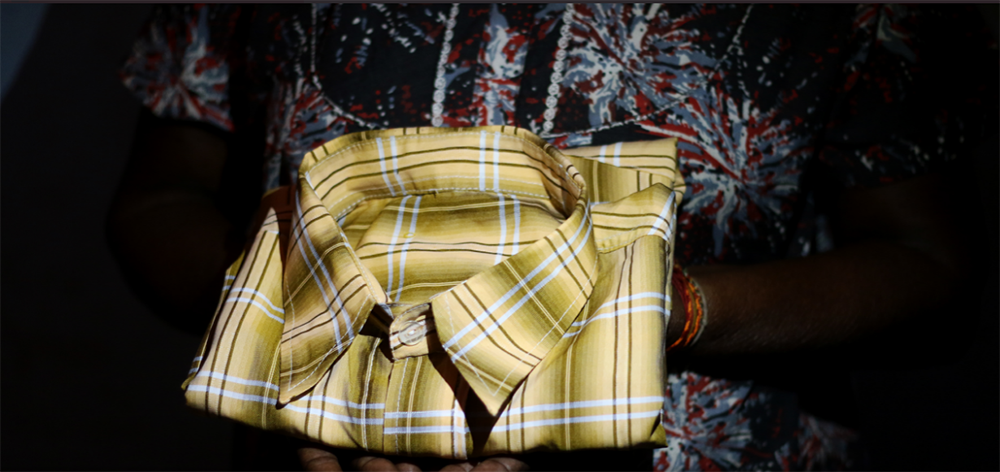
“I have, son. I kept it safely. I washed my son’s blood-stained shirt, and kept it with me.”

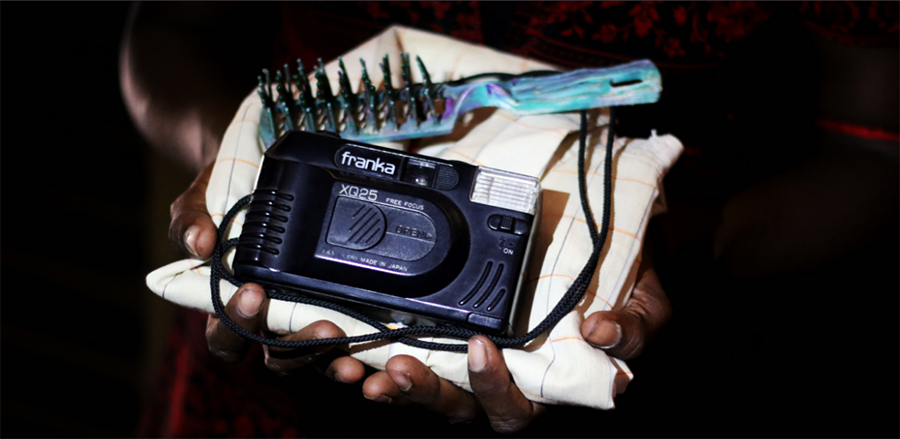
“Yes, brother. I have one brother’s camera, and the other’s comb. I have my husband’s shirt as well.”

“We only had our clothes when we crossed over to the Army side, right? We didn’t have anything else. We thought our son would return, and that’s why we handed him over to the Army.”

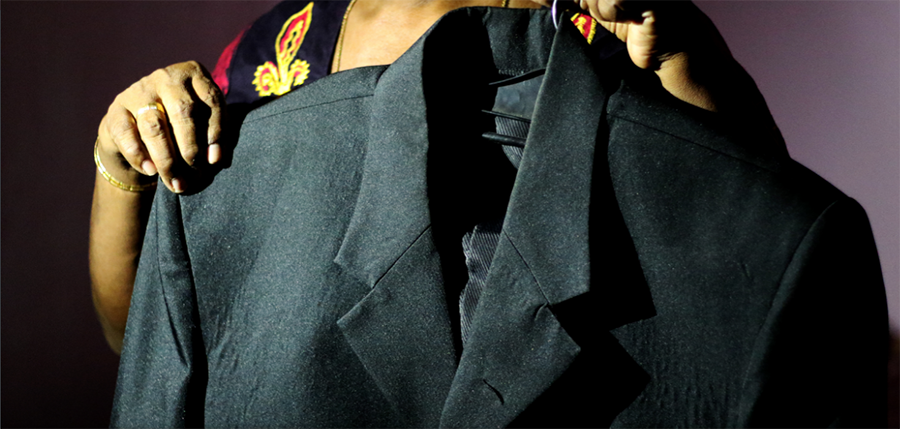
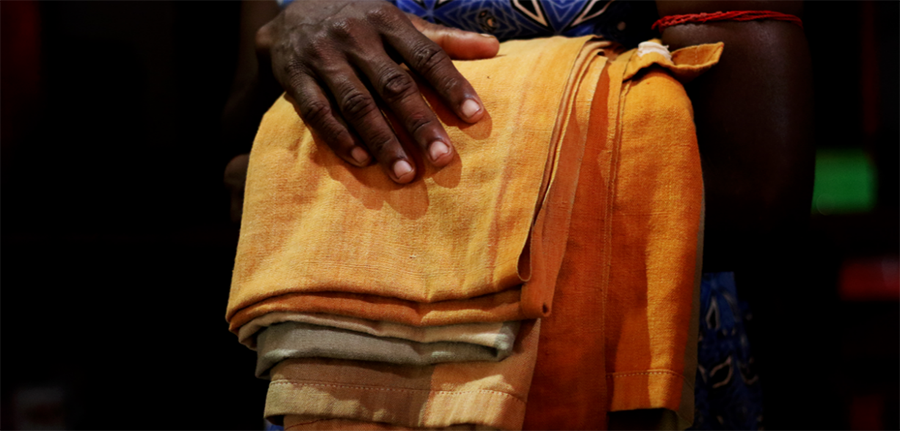
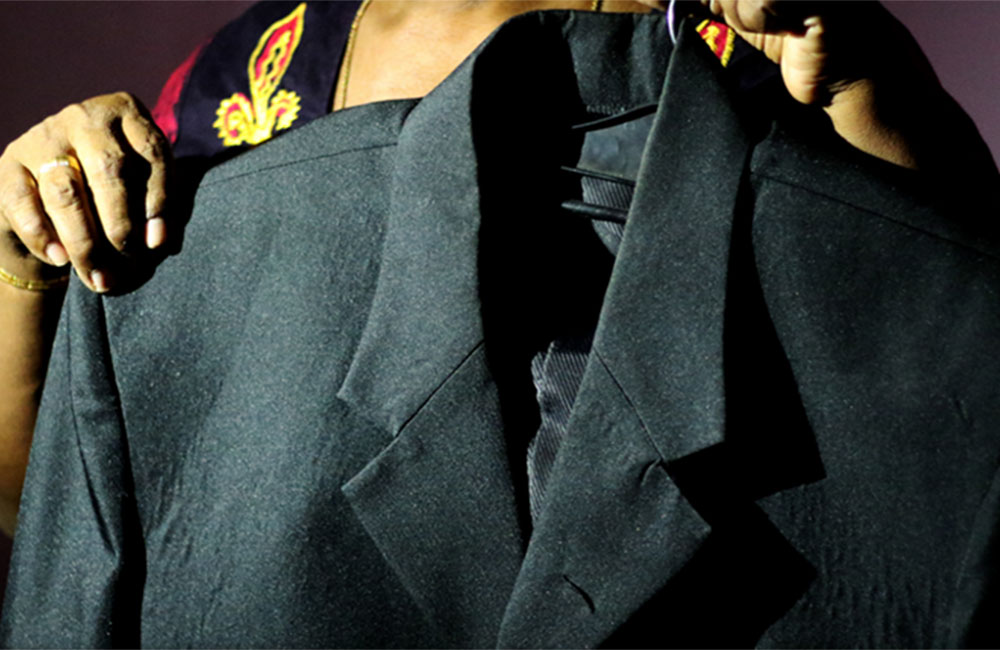
“I have the blazer that we made for him to wear for his elder brother’s wedding. Since that’s all I had left in my suitcase, that’s the only thing I have to remember him.”

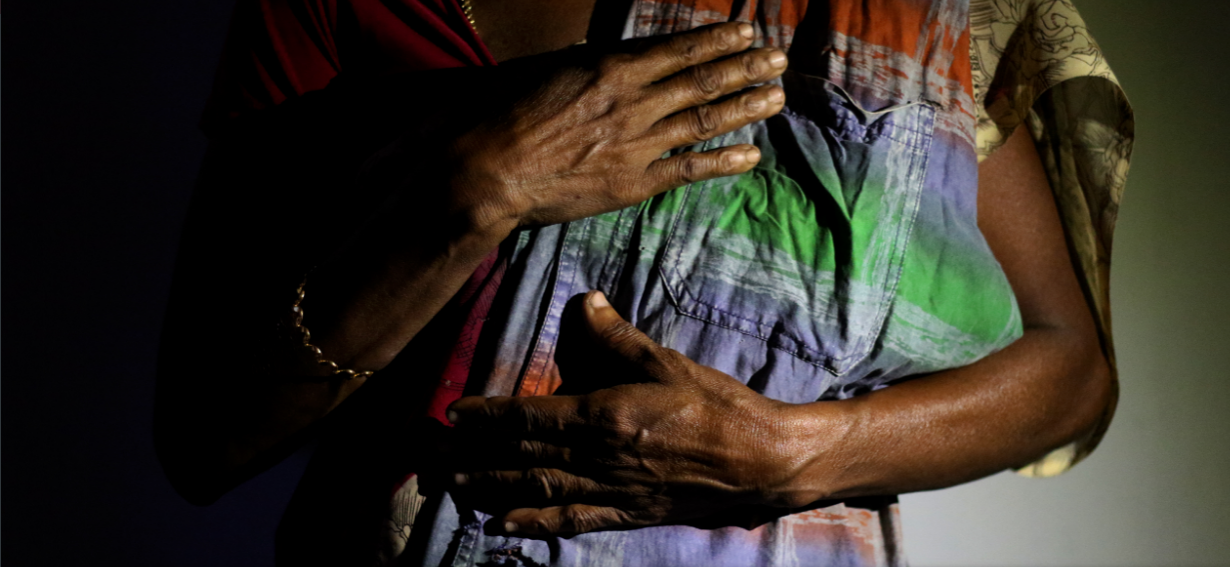
“I have the bedsheet my husband used. When she thinks of him, my daughter covers herself with this sheet.”

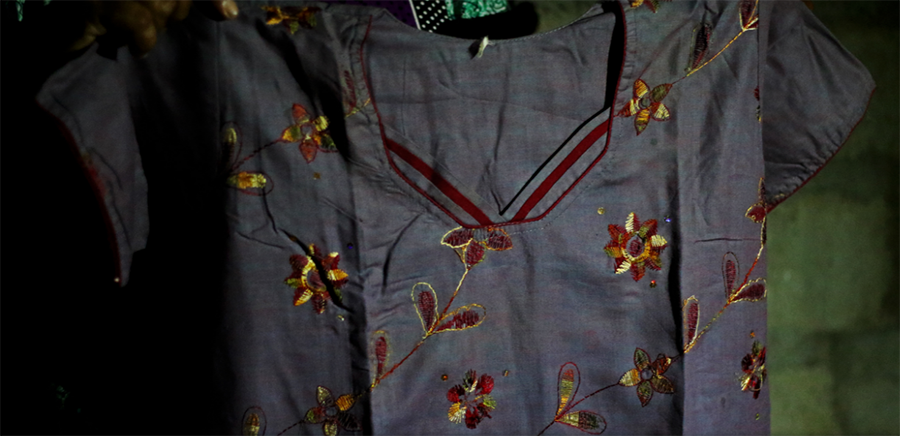
“This is a shirt my son sewed himself. He used to make clothes for me as well.”

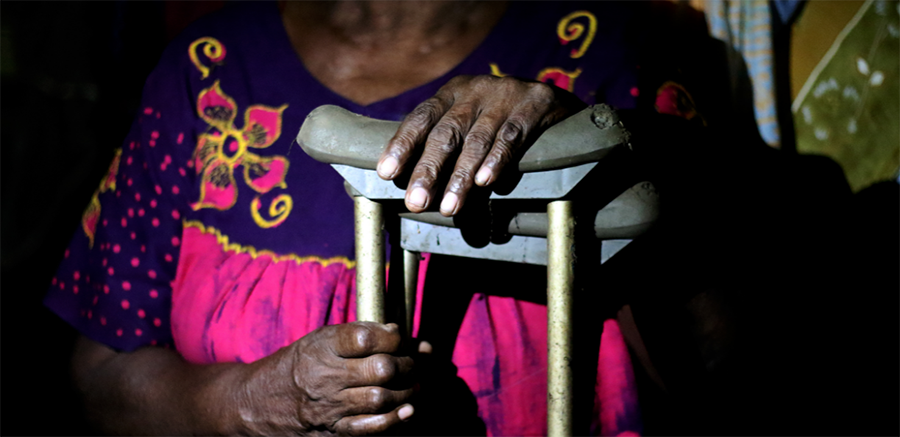
The relatives of those who have been forcibly disappeared live on. They live surrounded by treasured possessions, each a reminder of their loved one’s absence. They pass by the places they once walked, and meet people their missing ones loved.

Recently Maatram visited these families to ask them a difficult question – if they would share their loved one’s possessions to be photographed. Upon asking this question, they wept bitterly. Their pain cannot be described with words.

Still, they came forward with these treasured belongings, wet with tears. They believe their loved ones will return. It was with great relief that their loved ones had survived, through bullets and shellfire that they handed them over to the Army. Now, since they haven’t returned, they are suffering.

Their sadness is immeasurable.

This is their story.

PIC1

“During the last stages of the war, we handed our family over to the Army ourselves – my two younger brothers, aged 27 and 29 years, and my 30-year-old husband. Believing that they would question them and then release them shortly, we got into the bus and went to the IDP camp. At that time, I was 7 months pregnant with my second child (a daughter). My father said, “We can’t wait here without food or drink, let’s go back. They’ll return soon.”

They still haven’t come back. We have had to submit their documents to so many Commissions of Inquiry, and each time it costs us Rs. 300 or Rs. 400. They ask us who we handed our family over to, if we remember any names, and if we can remember any medals or symbols they were wearing. At that time we didn’t even have clothes to change into. We were going through such hardship, so how can we be expected to remember all these details?

Instead of making us search all this time, they should tell us whether our loved ones are alive or not. My children are always asking for their father. My daughter is now 8, and she still hasn’t seen her father. My son is 11. Whenever there is an event at school, he always sings about his father. They ask me if I have his phone number. If I die without finding my husband, I can manage. But at least if they can find one of my brothers, my mother and father can die at peace.

People who remember those who were lost in Mullivaikkal will remember in a month, 6 months, or a year. For us, we remember our family every day with sadness, and we will do so until we die. I still wear my pottu and wedding thali, thinking that I will see my husband again. My mother and father give me courage to keep going. If not for them I don’t know what I would do.”

PIC2

“My son’s name is Nalinikanth. At home, we call him Vijay. He is well-known in our village by that name. In 2007, the LTTE forcibly recruited him. He was just 19 years old. I never saw him again, but someone met him after I last saw him. He told them that he would be surrendering to the Army, and asked them to let me know. I never saw him again. Some people from the fourth floor (Editor’s Note: referring to the infamous fourth floor of the CID) came and said they had details about someone in their custody. The area was right, the Grama Sevaka Division was correct, even my name and my husband’s was correct, but the name of the person concerned was Vinothkanth, not Nalinikanth. They said they would clear up the confusion and let us know, but they never came back. We will only find peace when we know if our children are alive or dead. Since we don’t know, our minds are in tumult.”

PIC3

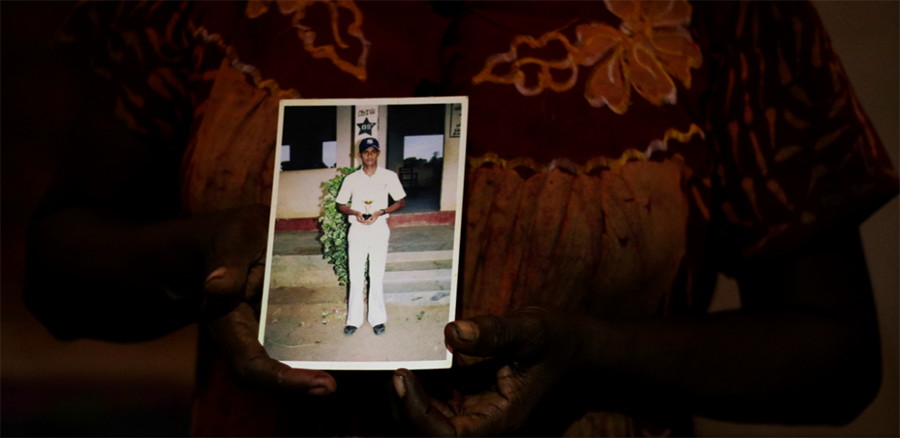
“My daughter was forcibly recruited by the LTTE, after finishing technical college. In 2008, she came for a relative’s funeral. We saw her for the last time around the end of 2008. When I went to the IDP camp, I heard she was at the Mannar hospital. I went and looked for her. She wasn’t there, but her name was registered by some police stationed at the hospital. Someone had come and taken her. A number of people from Ottuchutan were at the hospital. I showed them my daughter’s picture and asked if they had seen her. They said they recognised her, and said that her hand was injured. I heard from others that she had been shifted to the Pambaimadu detention camp. When I went there, I met a girl with the same name as my daughter, but it wasn’t her. This girl was from Trincomalee. I am still searching for my daughter.”

PIC4 1

“My son’s name is Johnson Idaydaas, from Thazhayadi, Jaffna. My husband, son and I were one of the unfortunate few trapped in the middle during the last stages of the war. We escaped by boat. It was only when we alighted that we realised that our son wasn’t with us. First, we put a notice in Virakesari newspaper. We didn’t receive a reply. In 2011, we put a notice in the Uthayan newspaper, with my contact number. One night, at around 11 pm, he called me. First, I heard a voice speaking in Sinhala, then the line was cut. I redialled the number, and said, “Sir, sir” to the person on the other end. He replied, “Five minutes only, five minutes only,” and gave the phone to my son. I asked him where he was. He said, “Don’t search for me. I don’t know if they would allow you to see me even if you did search for me. In any case it will be difficult due to your age. I am alive.” He said he didn’t know where he was, but said he was with 53 others. “There is a shortage of food and clothes. If you can get in touch again, please bring some clothes,” he told me. I asked him, “Why do you sound different?” He said “They are giving me injections.” I wanted to check if it was him, so I asked if he could remember his younger sister. “Why, we lost her in the tsunami, why are you reminding me now,” he said and began crying. I started to cry as well, and the line was cut. From that day to this, I have not been able to contact him. I am surviving with the thought that he is still alive.

This government has to do something. Not just for my son, they should tell everyone whose family is missing whether they are alive or dead. I just want to know whether he is alive or dead, that is my only wish.

Recently my elder son wore Johnson’s blazer to go for a family wedding. Before that, when he was going to Colombo, I asked him to wear one of his younger brother’s shirts. I told him it would bring him good luck. We made this blazer for his elder brother’s wedding, in 2007. When we were displaced, this blazer and four sarees were all I had in a bag. This is all I have of his possessions.”

PIC5

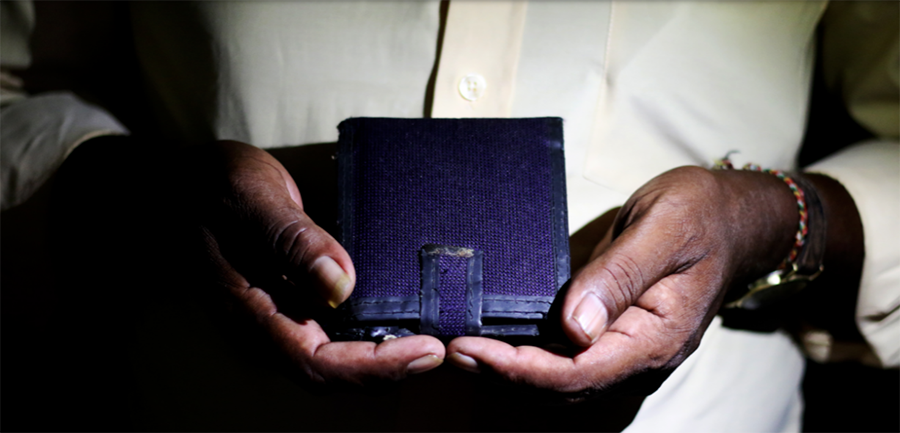
“On April 28, 2009, we were in a bunker. The Army came and took us away. One of our sons passed away, and it was our other son who made all the funeral arrangements. After the funeral, he put his brother’s wife and children into the last ship, but he stayed behind. At that time, he was 23 years old. I still don’t know where he is. On April 12, 2009, he came and left his sarong and shirt at home. To this day, I keep them to remember him. When I look at his clothes, I feel that he is alive. No one can tell me he is not alive. I know that he is.”

PIC6
“My son disappeared during the last stage of the war in 2009. So far, we have not heard any information about his whereabouts. He was just 17 years old, and was sitting for his Advanced Level examinations. We have lodged complaints everywhere – with the ICRC, numerous Commissions, the police and CID. I want to know if he is alive or dead. We have all his possessions, his clothes in a box. When we look at them, we remember him.

PIC7

“During the last stage of the war, I was injured when we were crossing to the Army side. They took the injured people separately, so I got separated from my son. I begged them to let me travel to the hospital with my son. Since that day, I don’t know where he is. Someone said he was in the detention camps. I went to 8 camps and looked for him, but he wasn’t at any of them. He was sitting for his Advanced Level examinations at that time. My son isn’t a member of the LTTE, so he has to be alive, I believe that. Only God knows whether the Government would give any information.”

PIC8

“My son sat for his Advanced Level examinations in 2006. In 2008, he was forcibly recruited by the LTTE. That same year, in Manalaru, the LTTE sent him to dig for an underground bunker. That area was shelled and he lost a leg. After that, the LTTE released him, and he was with us. Our son went missing during the battle of Mullivaikkal. On that day, he went with a friend to the beach. He never came home after that.

Two of my granddaughters were in the Sencholai children’s home which is in Puthukudiyiruppu. When the Army surrounded the area, they were displaced. One of them went missing in the chaos. We have yet to find her as well.”

PIC9

“My husband was a member of the LTTE. I handed him over to the Army. My husband said, “If I go, I won’t return.” I told him, “If everyone is surrendering to the Army, why do you think only you won’t come back?” I feel guilt because I am the one who convinced him to surrender although he didn’t want to. I recognised my husband in a photo Virakesari published - he was fourth in a row of people. I took the photo and lodged complaints everywhere, including the ICRC. I too was a member of the LTTE, but was released from the camp because I have two young children. After being released, the CID continuously harassed me. I told them, ‘I have registered everywhere as a member of the LTTE. If you want to arrest me, then please find my husband and bring him so that he can look after the children. Then you can arrest me.

Once you hand over someone to the Army, they should give details about what happened to them. Though I was a member of the LTTE, I didn’t hide anywhere. I stayed in my house, because my husband would know to find me there. If I leave, he wouldn’t be able to find me. So until the Government releases him, I will stay here. When my daughter thinks of him, she uses his bedsheet to cover herself.”

PIC10

“I have one son. The LTTE continually asked us to give him to them. The last time, instead of taking my son, they took my daughter. She was in grade 9. During the final stages of the war, I saw her but once the fighting intensified, I lost track of her. I searched for her in many camps after the war, including the Ambepussa camp. I went to Colombo as well, but did not find her there. I don’t know what happened to her.”

PIC11

“I have four daughters. It was the eldest who disappeared. She used to support the family with her income. She went missing during one of the more intense battles near the end of the war, when shellfire was heavy. Many people said that they saw her near Vattuvaagal. Since it was a border area between the LTTE and the Army, I still believe she is alive and in a detention camp somewhere. My husband is now paralysed, suffering with depression because of the loss of our daughter.”

PIC12

“My son worked as a tailor for 15 years. This is a shirt he made himself. He used to make clothes for me and even my daughter’s children. May 17, 2009, we crossed to the Army controlled area, and handed our son over to the Army. We did so believing that they would release my son. After that, we never saw him.”

The families of those who have been forcibly disappeared await answers.

In Their Absence: Families of the Disappeared Share Treasured Keepsakes

What Buddhism teaches about peace and war

Adherents of a peaceful religion have been finding cause to fight

BUDDHISM is generally regarded, with good reason, as the most peaceful of world religions. Like other South Asian faiths, it stresses the principle of ahimsa, the “non-injury” of other living things. Yet its teachings also emphasise that violence harms the spiritual state of the perpetrator, as well as the victim.

Malicious thoughts or deeds are regarded as obstacles on the path to nirvana, the self-transcendence which is the end-point of all spiritual endeavour. Early Buddhist history contains strong pacifist messages. The faith’s founder, Gautama Buddha, is said to have stopped a looming war over water supplies with a rival clan, the Koliyas. After converting to Buddhism, Emperor Ashoka, who ruled over south Asia in the third century BC, is believed to have felt remorse for the bloodshed he had caused in his earlier life.

More recent history is rather different. In Asia, Buddhist monks have been in the front line of bloody inter-communal conflicts, as Buddhist 2propagandists or even as participants. In Sri Lanka zealous groups such as Bodu Bala Sena (Buddhist Power Force) have propagated the view that a small Muslim community is a deadly danger to the country’s integrity as a Buddhist nation. Hard-line monks took a militantly anti-Tamil stance during the country’s civil war which ended in 2009. Last month a Buddhist monastic in Sri Lanka was arrested and charged with attacking a centre for Muslim refugees. In recent years, militant monks have also stormed mosques, slaughter-houses and places of learning.

In Thailand, Buddhist monks have been victims and protagonists in a conflict that has raged in three southern provinces where the population is mainly Muslim. It is not unknown for monastics there to brandish weapons under their robes. The killing of two monks in 2004 triggered an escalation of fighting.

But it is in Myanmar where Buddhist violence has become most familiar of late. A monk called Ashin Wirathu has led demands for a harsh response to a perceived Muslim threat. His organisation, Ma Ba Tha, has supposedly been banned, but it still presses the authorities to take the hardest of lines against the Rohingya Muslims, of whom over 600,000 have been expelled to Bangladesh. Ma Ba Tha disseminates the idea that Myanmar’s overwhelming Buddhist majority is threatened by the Muslim minority. The stance is criticised by some Asian Buddhists. The Dalai Lama, Tibet’s exiled spiritual leader, has rebuked his coreligionists for persecuting the Rohingya, saying they should “remember Buddha”. He insisted that the faith’s founder would “definitely help those poor Muslims”.

Like every other important religion in history, Buddhism engenders powerful protective feelings among its followers, especially when sacred history and national history become intertwined, as happens in Sri Lanka. In the collective memory of Sri Lankan Buddhists, the emergence of their nation is seen as linked with the advent of their faith in the era of King Ashoka, if not earlier. And whenever people feel a threat to their identity and origins, they can easily be induced to lash out with disproportionate force, just as medieval Christians marched to war when told that their faith's holiest places in Jerusalem were being desecrated.

Moreover, as with any vast corpus of sacred texts and annals, things can be found in the Buddhist tradition to justify violence, at least in self-defence. Medieval Japan, for example, had its Buddhist warrior monks. And even the Dalai Lama agrees that one can take limited action in self-defence. If a man is aiming a gun at you, he once said, you can shoot back, but to wound rather than kill.

Source: The article was first published in the Economist on November, 17.

Photo Credit: Reuters


What Buddhism teaches about peace and war